More and more of us are using AI tools like ChatGPT, Perplexity, Google’s AI Overviews, and Gemini for research, comparing products, checking out companies, and deciding whether to buy something. Generative search engines like Google’s AI Overviews and ChatGPT process billions of searches and drive AI summaries to about 21-48% of those searches.
That changes how brands obtain visibility. SEO should not be the only focus anymore, and Generative Engine Optimization, or GEO, can be added into your search visibility plan.
It doesn’t mean you can say goodbye to SEO. It is just that you have to learn how to make your website and brand easily understandable, trustworthy, retrieved, and cited by AIs.
In this article, we will discuss how you can improve brand visibility in search engines.
Why AI Search Is Different
Traditional search engines primarily organize and rank web pages. When someone searches for “best project management software,” Google may return a list of pages, reviews, product sites, and other resources.
AI search works more like an information layer. It can interpret the question, retrieve information from multiple sources, compare those sources, and generate a response instead of simply presenting a list of links.
| Traditional Search | AI Search |
| Produces a list of links | Produces a synthesized answer |
| Focuses heavily on rankings and relevance | Focuses on relevance, context, trust, and retrievable information |
| Users usually click through to websites | Users may get their answer without visiting a website |
| Visibility is measured through rankings and clicks | Visibility also includes mentions, citations, and references |
| Keywords remain important | Clear entities, context, authority, and useful information also matter |
This does not mean traditional SEO is becoming irrelevant. In many cases, the foundations overlap. A technically accessible website, useful content, strong authority, and good search visibility can support both traditional and AI search.
The difference is that you are no longer optimizing only for a person deciding which result to click. You are also making your information understandable and useful to systems that may extract, compare, and summarize it.
Create Content That AI Systems Have a Reason to Cite
Many brands make the mistake of publishing the same content that simply repeats information already available on hundreds of other websites.
The better approach is to create information that adds something new.
Original research is particularly valuable. This could include customer surveys, industry data, product testing, internal experiments, benchmark results, pricing comparisons, or analysis of trends. Even a relatively small study can give other websites something worth referencing.
Expert commentary can help too. Instead of writing a generic explanation of a subject, include informed opinions from people who actually work in that field. Explain why they reached a particular conclusion rather than simply adding an expert quote for appearance.
First-hand experience also makes content more distinctive. If your company has tested a product, implemented a process, analyzed a campaign, or worked through a particular problem, explain what happened and what you learned.
The basic question to ask before publishing is:
“What does this page contain that another website cannot simply copy from the first page of Google?”
If the answer is nothing, the content probably needs a stronger point of view or more original information.
Write the Way People Actually Ask Questions
People tend to phrase AI searches differently from traditional searches.
Rather than typing: “best CRM small business,” someone may ask:
“What is the best CRM for a small business with a five-person sales team?”
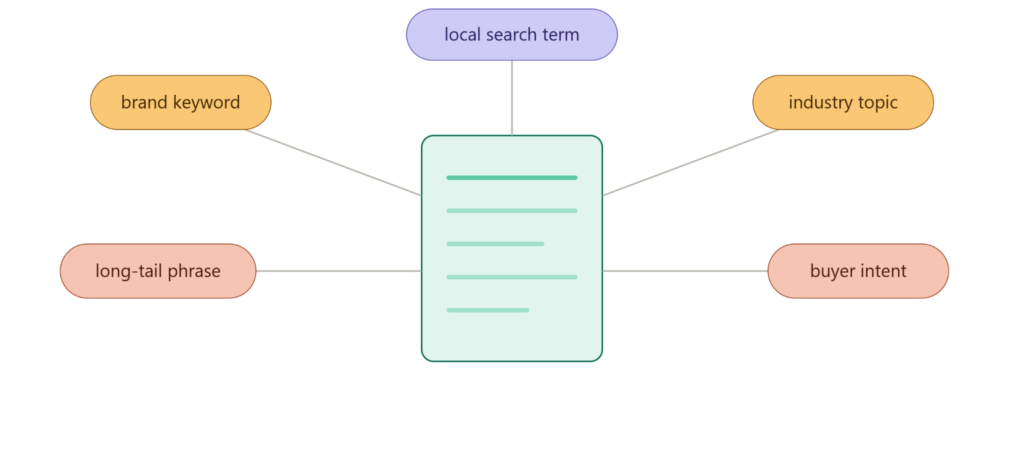
That longer question contains more context. AI systems can use that context to determine what information is relevant.
Your content should therefore answer questions naturally rather than forcing keywords into awkward sentences.
Use headings such as:
What is the best CRM for a small business?
How much does CRM software cost?
Which CRM is easiest for beginners?
Then answer the question directly before expanding on it.
A useful format is answer first, explanation second. Give readers a concise response near the beginning of a section, then provide supporting information underneath.
Establish Authority Around a Clear Subject
AI visibility is not only about individual pages. Your broader reputation matters.
If a website publishes one article about cybersecurity, another about gardening, another about accounting, and another about travel, it may be harder to establish a clear topical identity.
A site that consistently publishes useful information about one area can build stronger topical relevance.
For example, a cybersecurity company could create connected resources covering:
- ransomware prevention
- employee security training
- phishing protection
- endpoint security
- password management
- incident response
- cybersecurity compliance
The important part is not simply publishing dozens of articles. Those articles should connect logically and demonstrate genuine knowledge of the subject.
Over time, this creates a stronger association between the brand and its area of expertise.
External recognition strengthens that association. Mentions from respected publications, industry organizations, podcasts, research reports, and relevant websites can provide additional evidence that the company is established within its field.
Make Your Content Easy to Extract and Understand
AI systems need to interpret your content before they can use it.
A page with a huge wall of text is harder to navigate than one with a clear hierarchy.
Use descriptive headings, short paragraphs, tables where comparisons are useful, and lists when information naturally belongs in a list.
Definitions should also be straightforward.
If you introduce a specialized term, explain it in plain language rather than assuming the reader already understands it.
For example:
Generative Engine Optimization (GEO) is the practice of improving a brand’s content and online presence, so it has a better chance of being referenced in AI-generated answers.
That is much easier to understand than burying the definition several paragraphs later.
The same principle applies to product information. Clearly state what the product does, who it is designed for, its important features, pricing where appropriate, and how it differs from alternatives.
Clear information is useful to readers first. The fact that it can also be easier for machines to interpret is an added benefit.
Answer Important Questions Directly
Stop making readers think, or at least, work too hard for the answer. An article about a topic that spends about 600 words to get around to the answer in the final paragraph. This type of paragraph format might be annoying to readers. And can be less helpful to AI searching for an immediate answer.
Give the answer up front: If the question is an answer to, “how much is X,” say the price. Or in an answer to, “Should small businesses use X,” directly answer yes or no before outlining your justification.
These tactics are especially effective for content designed to be informational. To find them, talk to your customers, listen on sales calls, read customer support tickets, review user forums, do keyword research, browse Google’s “People also ask” function, use a question research tool such as AnswerThePublic, etc.
While FAQ pages might answer customer questions at times, adding pages of non-descript questions probably isn’t the solution.
Continue Optimizing for Google
AI search doesn’t get rid of traditional SEO. How Google’s AI Overviews exist within the context of Google’s wider ecosystem means traditional ranking signals (relevance, content quality, crawlability, visibility, etc) will still matter a lot.
Keep up with the fundamentals of SEO. Ensure your key pages are crawlable and indexable, have relevant titles and headings; ensure that your pages are fast, mobile-friendly, and earn relevant links to pages.
If it falls within the YMYL category (Your Money Your Life-health, money, safety, and anything impacting life), showing trust and authority should now be of even greater importance.
Explain the authority of who is generating content, the credentials they have, what sources the information comes from, and, importantly, keeping that content updated.
Improve the Technical Foundation
If search engines cannot read and access your website effectively, good content will do no good. Start with the foundations. Your website structure will need to make sense with a good URL system, logical internal links, a working XML sitemap, a structure search engines are able to understand, and a site that search bots are permitted to access.
You can increase a search engine’s understanding by using structured data for different content types on a website, such as an organization, article, product, review, event, or entity of specific relevance to your website type.
Schema markups aren’t a shortcut for AI discovery; the presence of structured data doesn’t mean a certain AI program will list your company. Instead, it helps the search engine know what information it is reading.
For example, a product page must make it clear that the content it provides is, indeed, product-specific information such as brand name, product name, availability, reviews, and cost.
Removing broken links, ensuring pages aren’t incorrectly marked noindex, crawl check for key pages, and avoiding blocking important content behind technical processes is a key part of cleanup.
Build Mentions Beyond Your Own Website
Your website is only a part of your web presence.
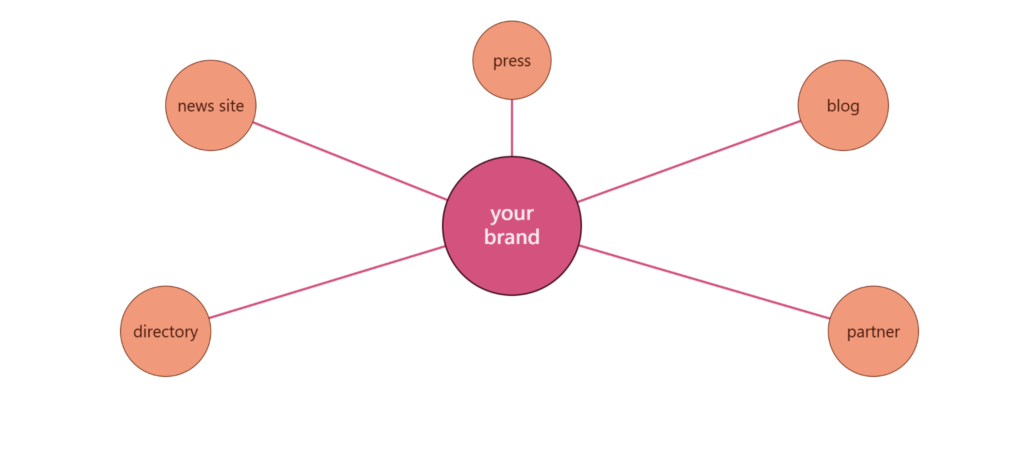
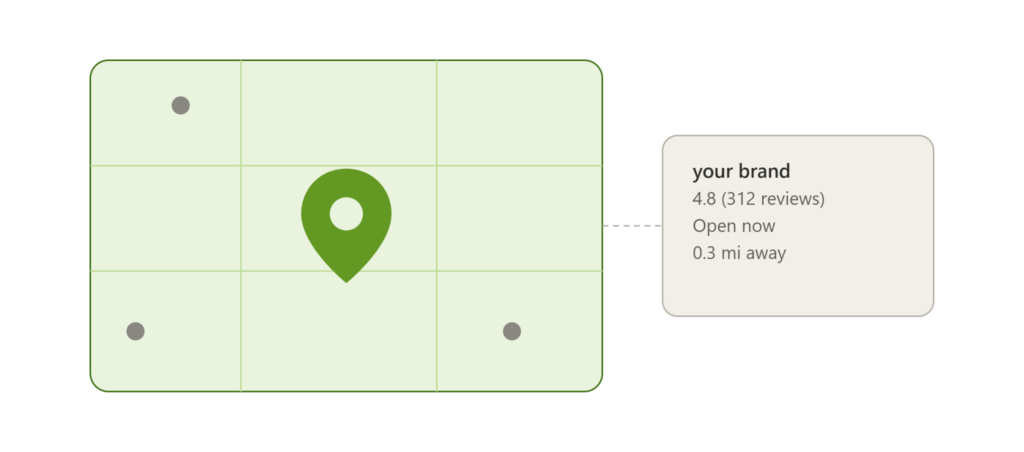
AI systems can find out information about the business through many different channels. It can be from other media sources (news outlets, trade websites), company registries, company review websites, online forums, interviews with executives, social media channels, video streams, and many others.
A business that is often mentioned in several significant sources has a wider digital “fingerprint” as compared to a business that is only represented on its own website.
It is why initiatives like original research, public relations, expert opinion, guest appearances on podcasts, public speaking or conferences, valuable tools, and any industry initiatives may contribute to visibility for AI systems.
Contributions through guest posting matter when the business provides genuine expertise through a well-known and trustworthy source. Posting guest posts as numerous low-quality links may do the opposite of what you want (or in fact zero results).
Monitor How AI Systems Describe Your Brand
The usual metrics for traditional SEO are rankings, impressions, clicks, and organic traffic, which make the measurement clear. For AI visibility, though, we need something a bit more refined. Develop a list of questions that are important to you. And not the abstract ones, but questions your target customers are actually asking, and then search those questions.
For a software business, these questions might look like:
- What are the best tools for X?
- What should small businesses look for in Y software?
- Alternatives to [competitor] Software?
- What companies offer Z?
- Best option for A?
Record down whether your brand comes back, any mentions you get, the sources that are used, and how your brand is referred to.
It’s the nuance. Getting listed is one thing. When a variety of platforms use specific references to help your ideal customers solve your exact problem, that means you’re already winning AI for that query.
Tracking this information will tell you what ground you’ve captured, as well as who’s gaining.
Adapt Your Strategy to Different AI Platforms
Not every AI search system retrieves and presents information in exactly the same way.
ChatGPT can use information from the web, depending on the experience and mode being used, while its broader knowledge is also influenced by its training data and other information sources. A strong presence across reputable websites can therefore contribute to how a company is represented.
Perplexity places a strong emphasis on web retrieval and citations. This makes crawlable, well-structured, current content particularly useful when users are asking questions that require fresh information.
Google Gemini and AI Overviews exist within Google’s broader ecosystem. Strong search fundamentals remain important, while Google’s wider content ecosystem can also influence how information about a brand is discovered and understood.
Microsoft Copilot is closely connected to Microsoft’s ecosystem and web search infrastructure. Maintaining accurate business information and a strong presence across relevant professional and industry sources can therefore be useful.
Mistakes That Can Reduce AI Visibility
You should treat AI visibility as a completely separate discipline from content and SEO. These are some mistakes most people make that can reduce AI visibility over time.
Generic AI Content
Producing large amounts of generic AI-generated content without adding original information. Publishing more pages does not automatically make a brand more authoritative.
Dated Information
Outdated information can also become a problem. Pricing, product specifications, company details, regulations, software features, and industry statistics can change quickly. If your website continues displaying old information while other sources provide current details, your content may not be very useful to others.
Bad Site Structure
Poor site structure creates another obstacle. Important information should not be buried several levels deep or scattered across pages that do not link to one another.
Keyword stuffing
Keyword stuffing is equally counterproductive. Writing naturally and explaining concepts clearly is more useful than repeating the same phrase dozens of times.
How to Know Whether Your Strategy Is Working
AI visibility is still a relatively new thing, so there is no single number to explain everything.
Follow mentions of your brand in appropriate AI responses, links from the sources into your website, and the questions themselves that produce the mentions, and how often a competitor is mentioned in place of your brand name.
Ensure that traditional analytics continue to play a part in your efforts. Pay attention to organic rankings, impressions, clicks, conversions, backlinks, and referral traffic.
It’s important to follow how your brand is being portrayed.
How Long Does AI Search Optimization Take?
There is no universal timeline because results depend on the authority of the website, competitiveness of the topic, quality of the content, technical condition of the site, and how much external recognition the brand already has.
Technical improvements can often be implemented relatively quickly, although their impact on visibility may take longer to appear.
Content improvements may begin producing results over several months as search engines and other systems discover, evaluate, and reuse the information.
Authority building generally takes longer. Earning genuine mentions, links, research citations, media coverage, and recognition within an industry is usually a gradual process rather than something that happens after publishing a few articles.
For that reason, AI visibility should be treated as an ongoing marketing and content strategy rather than a short-term campaign.
Frequently Asked Questions
What’s the best way to get noticed by AI search tools?
Start with valuable, unique, and differentiated information. Bring together real-world experience and/or proprietary research/expertise with great content quality, strong on-page Technical SEO and Structured Data, and visibility across third-party sites and channels.
There is no magic or known hack for ensuring AI answers, so don’t rely on one.
How can I check if my brand appears in ChatGPT?
Run key phrases that would likely represent a potential customer asking a question you want to be referenced in, save when or if your brand is mentioned in the response, and do this across varied phrases and contexts, as one test can be unrepresentative.
For larger businesses, there are specific AI visibility monitoring tools and platforms available which automate the data collection for them to allow comparison of brands.
What is GEO?
GEO is also called Generative Engine Optimization and refers to efforts made by a brand’s content and profile so it is recognized as relevant and picked up in generation for use in generative AI answers.
It can best be considered an extension of traditional and modern search optimization as opposed to a replacement for SEO.
How is GEO different from SEO?
SEO traditionally focuses on improving a website’s visibility in search results. GEO focuses more specifically on visibility inside AI-generated responses.
The two overlap heavily. Technical accessibility, useful content, authority, relevance, and external references can matter to both.
Does AI search matter for online stores?
Yes. AI systems are increasingly being used to compare products, understand features, identify alternatives, and make purchasing recommendations.
For ecommerce brands, accurate product information is particularly important. Product specifications, pricing, availability, reviews, comparisons, and clear descriptions should be kept current across the website and relevant external platforms.
How can I compare my AI visibility with competitors?
Create a consistent set of questions related to your market and test them across the AI platforms your customers use.
Record which brands appear, how frequently they appear, which sources are cited, and the context in which each company is mentioned. Dedicated monitoring software can make this process more systematic for larger campaigns.
Conclusion
Even though AI search is transforming discovery, it’s fundamentally not that different for visibility. Brands still need valuable content.
Authoritative sites, outward trust, and a comprehensive understanding of your customer. It is not necessarily search results that have changed, but search answers themselves. So the question for marketers changes from how do we rank for this keyword to what will cause an AI to believe.
If brands continue to produce original content, prove their expertise, keep their details up to date on the internet, and make their content easy to consume.
They will thrive as AI search becomes a part of how everyone searches for businesses, goods, and services.