Your brand can rank #1 on Google and still be invisible when a customer asks AI which company to choose.
And this matters because 42% of consumers have already used an AI tool to shop, even for product recommendations and comparisons.
In this guide, we’ll look at the best AI visibility tools in 2026, what they measure, and which one may be right for your needs.
What is AI Visibility?
AI visibility is how often and with what level of accuracy your brand is mentioned within the responses from AI platforms such as ChatGPT, Perplexity, or Claude.
Each time someone asks one of these services about your company, product, competitor, or the industry at-large, your brand potentially enters the potential customer’s decision-making process.
To many of the companies out there, however, that visibility is invisible to their reports.
As more and more consumers start to research, benchmark, and identify trustworthy brands to do business with through AI, it allows them to make informed purchase decisions long before they hit your company’s website.
Three Ways AI Is Changing Brand Discovery
AI is not simply giving people another way to search. It is changing how they discover brands, what information they notice, and when they decide to investigate further.
AI Is Becoming the Starting Point for Product Research
People can now begin their research with a question rather than a traditional search query. Instead of searching for a specific company, they might ask an AI tool, “What are the best project management tools for a small team?” or “Which running shoes are good for beginners?”
This creates a new dimension of AI visibility. Your brand does not need to be known beforehand to become part of the customer’s consideration set. It can appear while someone is still exploring a problem, product, or category.
For businesses, this means AI visibility needs to extend beyond branded searches. A company should also understand whether it appears when potential customers ask broader questions related to its products or industry.
AI Is Compressing the Customer Research Journey
A traditional buying journey may involve separate searches for recommendations, comparisons, pricing, features, reviews, and alternatives. AI can bring many of these steps into one ongoing conversation.
A customer might ask for recommendations, follow up with a question about pricing, and then ask the AI to compare two options. Each stage creates another opportunity for AI visibility.
Being mentioned in the first response is therefore only part of the picture. A brand may appear when a customer asks for general recommendations but disappear when the conversation becomes more specific.
Tracking AI visibility across different questions can help businesses understand whether they remain part of the conversation as customers get closer to making a decision.
AI Decides Which Information About Your Brand Gets Attention
AI visibility is not just about being mentioned. It is also about what the AI says about you.
AI platforms can process information from numerous sources and condense it into a relatively short response. In doing so, they may highlight certain product features, benefits, limitations, reviews, or other details while leaving other information out.
The quality of AI visibility is just as important as how frequently a brand appears.
For example, a company might be mentioned often but consistently be described using outdated information or associated with a weakness that no longer reflects its offering. In that situation, having a high number of mentions does not necessarily mean the brand has strong AI visibility.
The goal is to understand how often your brand appears, where it appears, and how AI platforms represent it across the questions that matter to your business.
What Actually Influences AI Visibility?
AI visibility does not come from a single ranking factor. It is the result of numerous signals that help AI systems understand a brand and determine whether information about it is credible and relevant.
These signals can include:
- Earned media coverage
- Company-owned content
- Expert commentary
- Customer reviews
- Social conversations
- Third-party publications
- Industry rankings
- Brand mentions
- Consistency of information across different websites
AI Visibility Tools At a Glance
| Tool | Best For | Main Focus |
|---|---|---|
| Profound | Enterprise teams | AI visibility and competitive intelligence |
| Peec AI | Marketing teams | Prompt and competitor tracking |
| Otterly.AI | Smaller teams | AI monitoring |
| Semrush | SEO teams | SEO + AI visibility |
| Ahrefs Brand Radar | SEO professionals | Mentions, citations, and Share of Voice |
| LLMrefs | Prompt monitoring | AI mentions and citations |
| AIMentionTracker | Brand monitoring | Tracking brand mentions across AI platforms |
| Scrunch AI | GEO teams | AI visibility and brand presence |
| AthenaHQ | Ongoing monitoring | AI search tracking |
| Goodie AI | Smaller marketing teams | Brand and competitor visibility |
Best AI Visibility Tools in 2026
AI visibility tools are useful because they make it easier to see how your brand appears in AI-generated answers without checking every platform manually. Depending on the tool, you
The tools below can track brand mentions, citations, competitors, rankings, and the types of questions where your brand appears.
Profound
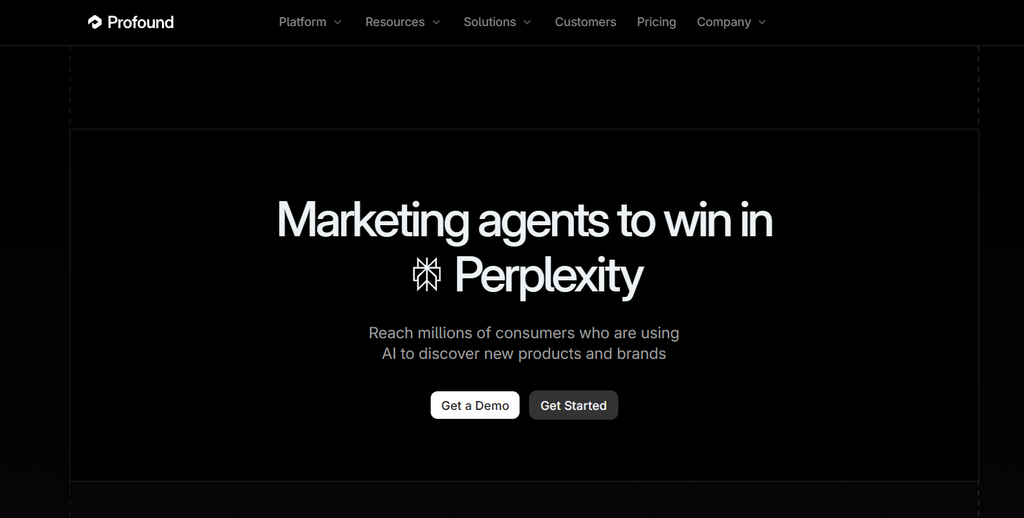
Profound is aimed mainly at larger companies that want to monitor AI visibility across multiple markets, products, or brands.
It can show how AI platforms describe a brand, which competitors appear alongside it, and which sources are being used in generated answers. This can be useful for teams that need regular reporting rather than occasional manual checks.
Key features
- AI brand monitoring
- Competitor tracking
- Citation and source analysis
- Prompt-level insights
- Reporting for larger teams
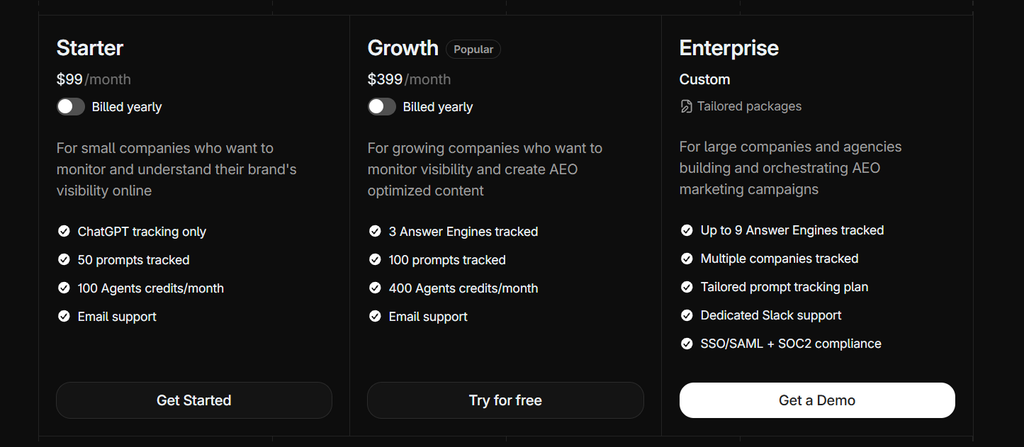
Pricing
Peec AI
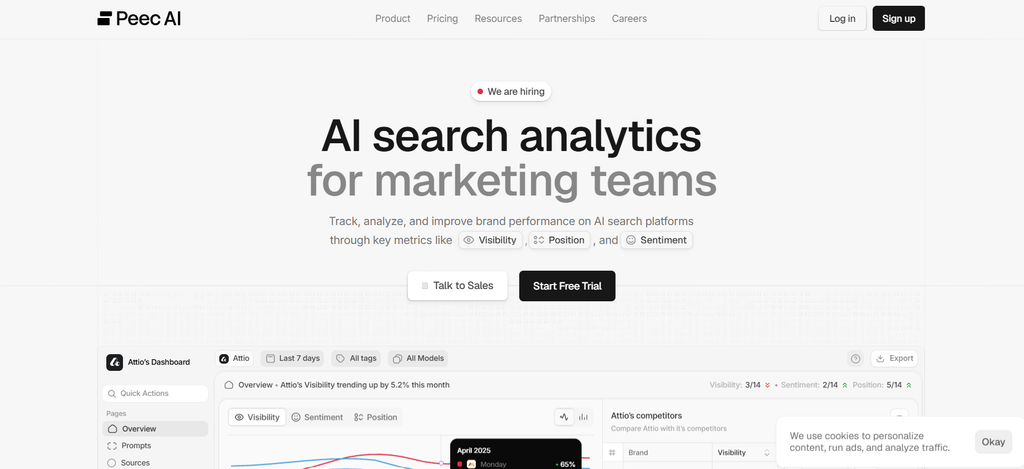
Peec AI focuses on tracking how brands and products appear in AI-generated responses. It allows marketers to monitor specific prompts and compare their visibility with competitors.
The platform can be useful when you want to see whether your brand appears for the questions your potential customers are actually asking.
Key features
- AI visibility monitoring
- Prompt tracking
- Competitor comparisons
- Brand positioning analysis
- AI response monitoring
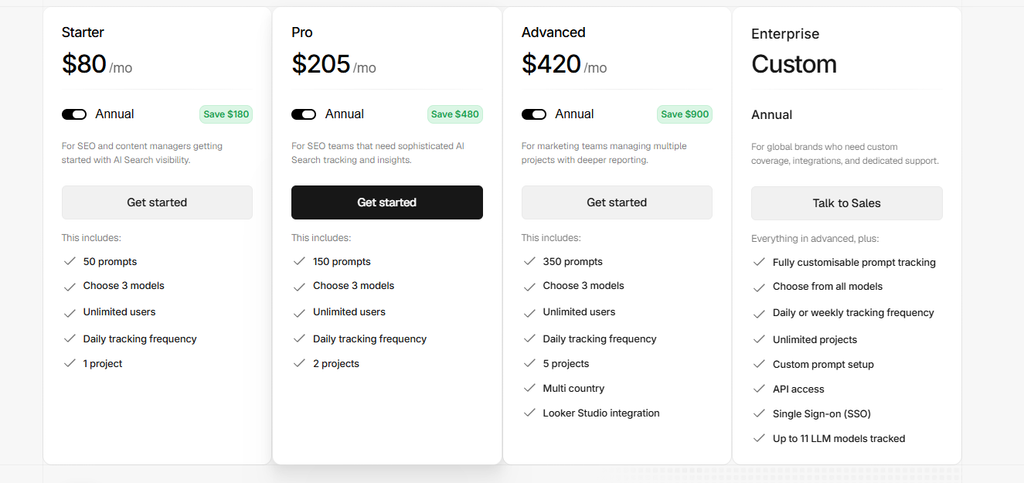
Pricing
Otterly AI
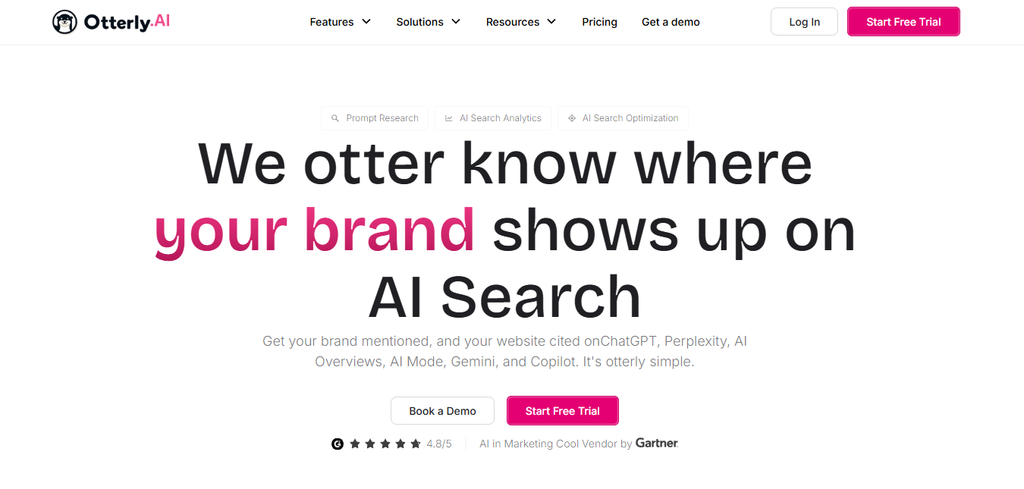
Otterly AI is designed around tracking brand and competitor mentions in AI search. It can monitor selected prompts and show where brands appear or are missing from responses.
This makes it relatively straightforward for smaller teams to start collecting AI visibility data without building a monitoring process themselves.
Key features
- Prompt monitoring
- Brand mention tracking
- Competitor monitoring
- Citation tracking
- AI search reporting
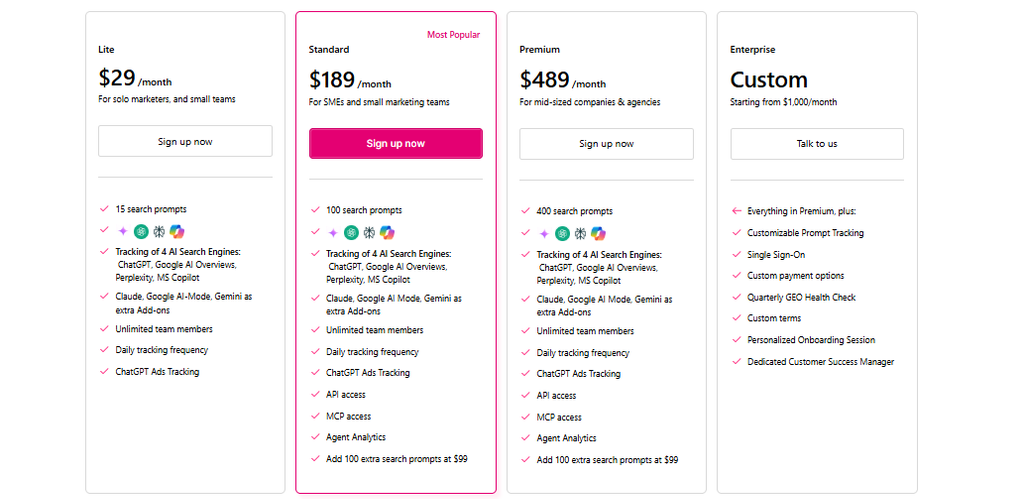
Pricing
Semrush AI Visibility Toolkit
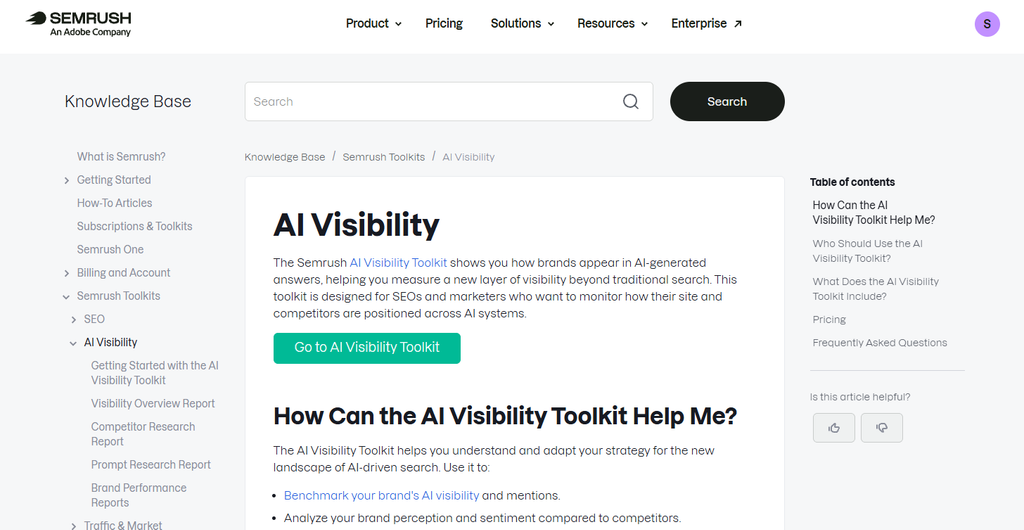
Semrush’s AI visibility features are particularly relevant for teams already using Semrush for SEO. Instead of keeping traditional search and AI-search data completely separate, marketers can use the same platform to examine both.
This can help when comparing traditional search performance with visibility in AI-generated answers.
Key features
- AI visibility tracking
- Brand and competitor monitoring
- AI search analysis
- Integration with SEO data
- Reporting and tracking
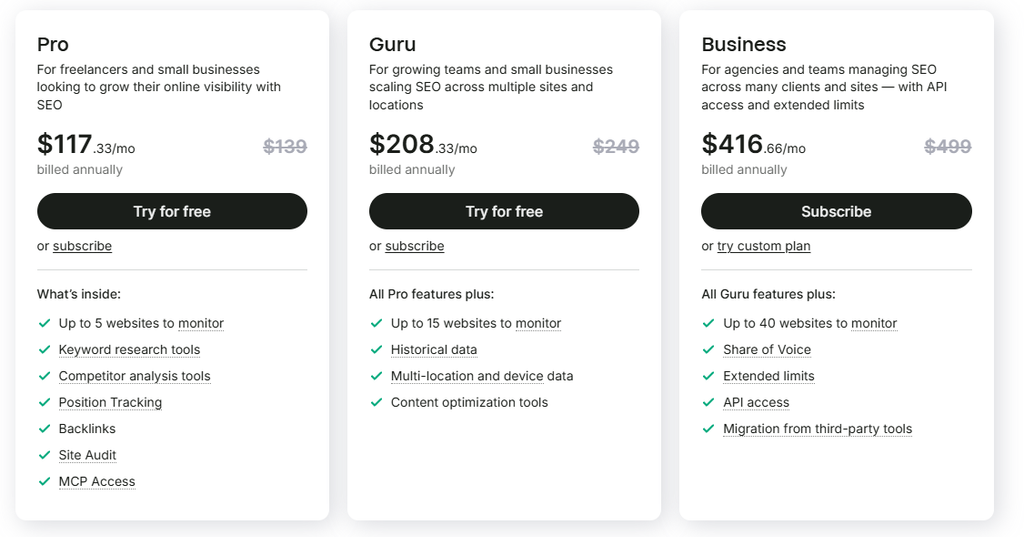
Pricing
Ahrefs Brand Radar
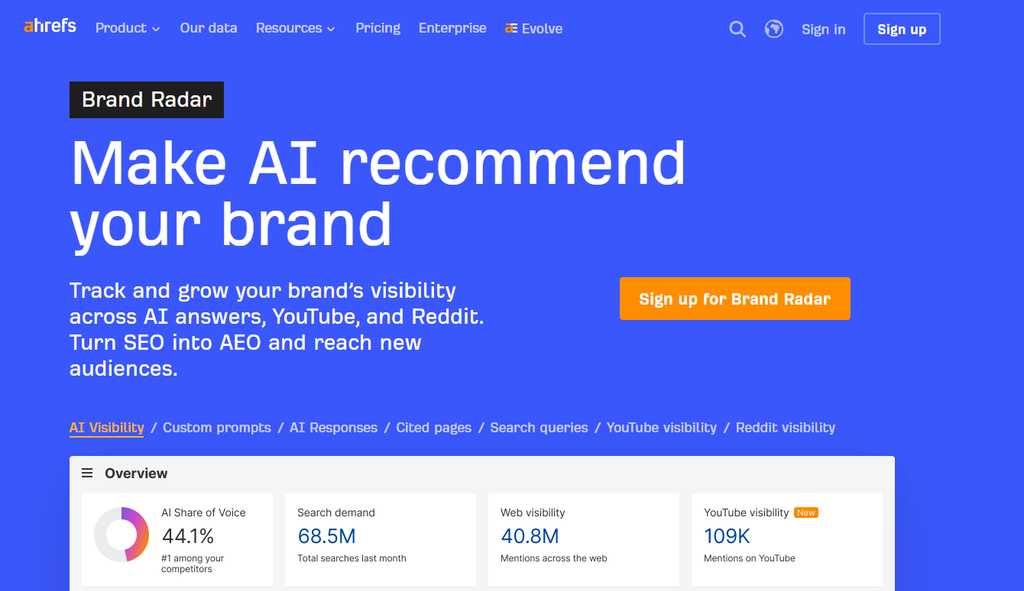
Ahrefs Brand Radar looks at how often brands are mentioned and cited in AI-generated answers. It also provides information about competitors and the sources appearing in those answers.
One useful part of the platform is its AI Share of Voice, which allows marketers to compare their presence with competing brands. Ahrefs also connects AI visibility data with other areas such as search and web visibility.
Key features
- AI mentions and citations
- AI Share of Voice
- Competitor comparisons
- Citation source analysis
- Connections between AI and traditional search data
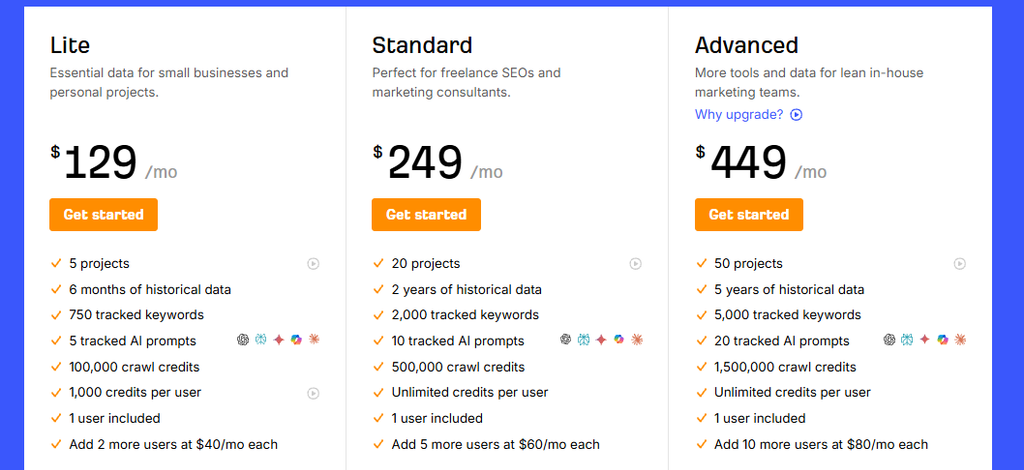
Pricing
LLMrefs
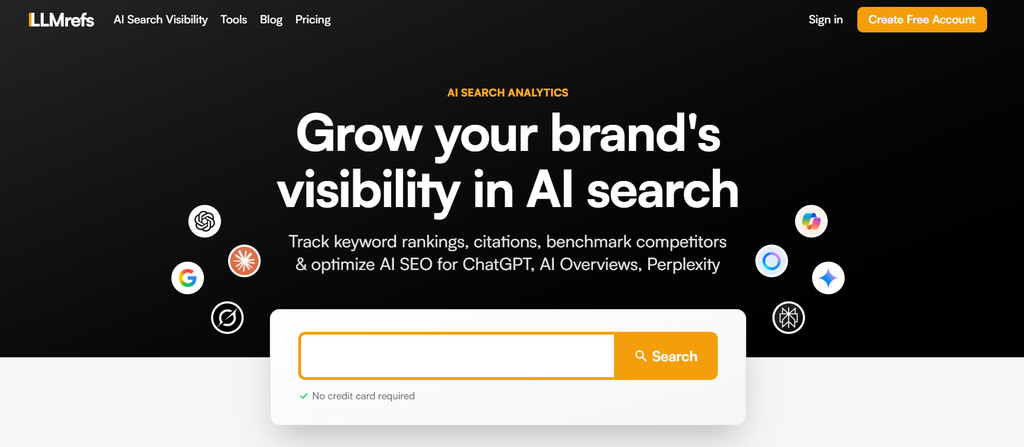
LLMrefs focuses on monitoring how brands appear in AI-generated search results. It can be used to track mentions, citations, and competitors across different AI platforms.
One useful aspect is its focus on the actual prompts that people might use when researching a product or category. This can help you identify questions where competitors are appearing but your brand is not.
Key features
- AI visibility tracking
- Prompt monitoring
- Brand and competitor mentions
- Citation tracking
- AI search analytics
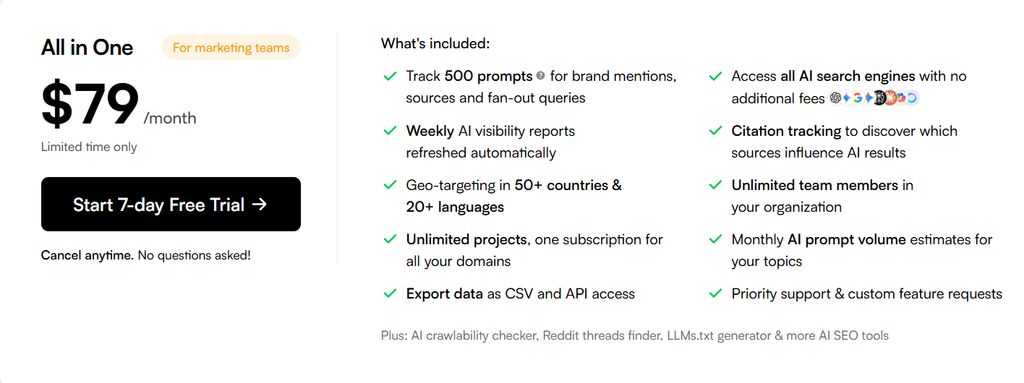
Pricing
AIMentionTracker
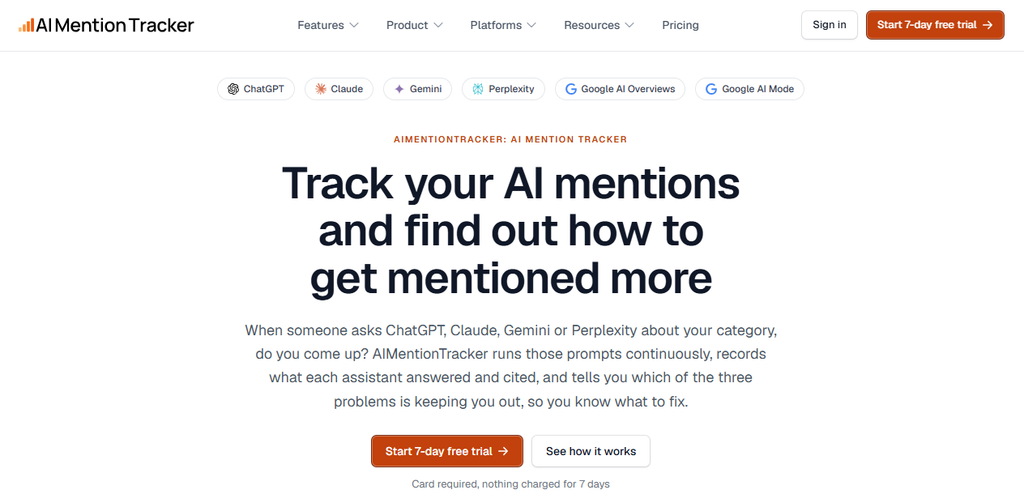
Use an AI visibility tracking tool like Aimentiontracker to see how often your brand is named across six AI engines, ChatGPT, Claude, Gemini, Perplexity, Google AI Overviews, and Google AI Mode, with each one reported separately rather than combined into a single score.
What makes it different is how it diagnoses an absence. Instead of a flat “not mentioned,” it splits the gap into three states: never retrieved, retrieved but not cited, and cited but not named, each pointing to a different fix. Every rate ships with its sample size, and full answers are stored with their citations so you can read the actual response instead of guessing from a number.
Key features:
- Per-engine visibility tracking, never averaged across the six platforms
- Sentiment analysis with the evidence behind each mention
- Citation tracking, including cases where you’re cited but not named
- Share of voice against competitors named in the same answers
- Custom prompt tracking with real search volume attached
- Full, searchable answer archive with citations
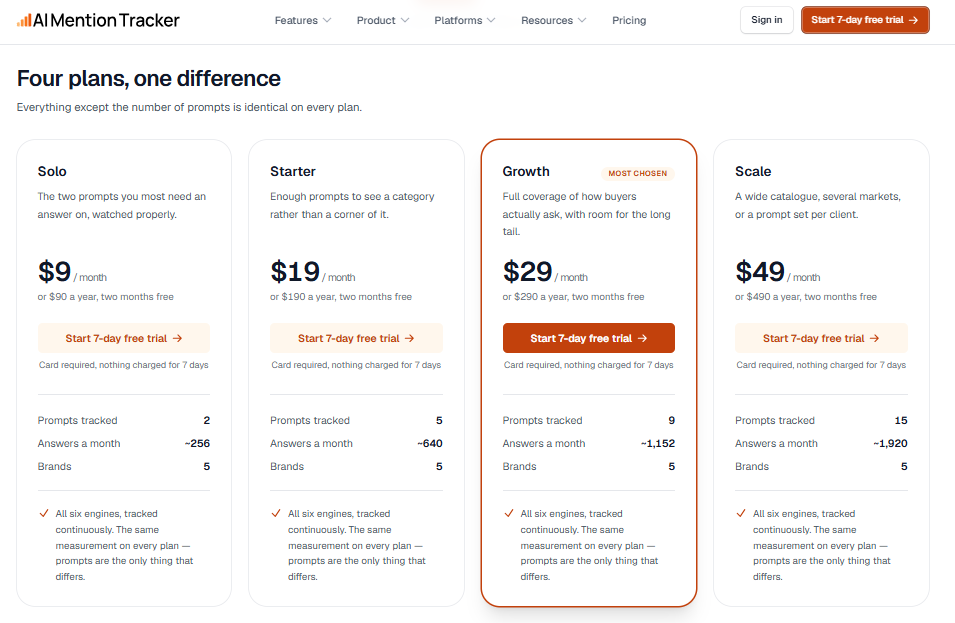
Pricing:
Scrunch AI
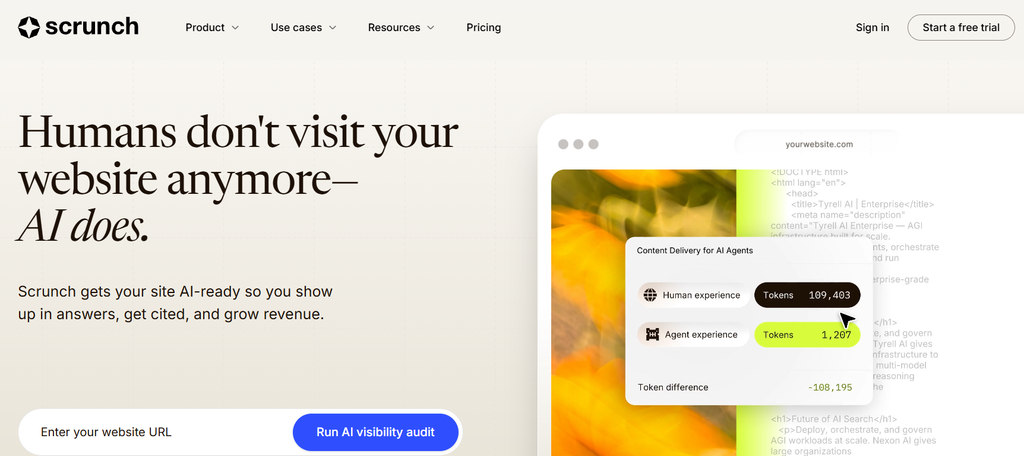
Scrunch AI is built around monitoring and improving a brand’s presence in AI search. It provides insights into how AI engines understand a business and where opportunities exist to improve its visibility.
It can be useful for teams that want to go beyond simply checking whether their brand was mentioned and look at the content and sources contributing to those answers.
Key features
- AI visibility monitoring
- Competitor tracking
- Prompt analysis
- Citation insights
- Brand presence analysis
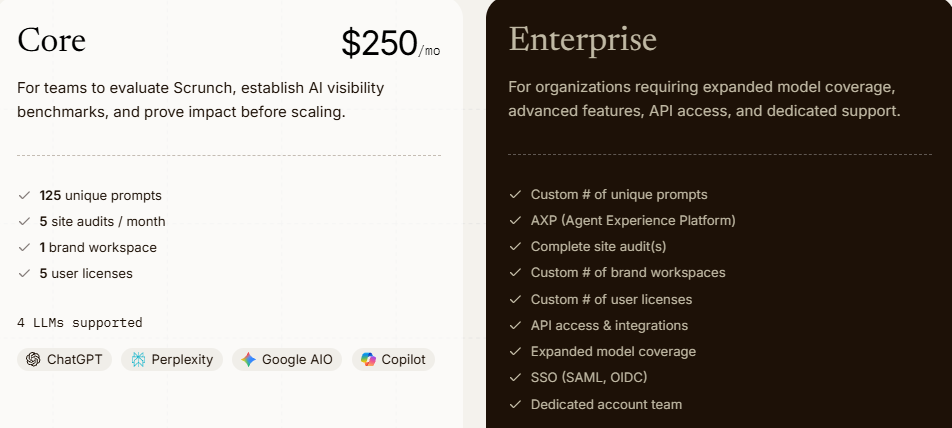
Pricing
AthenaHQ
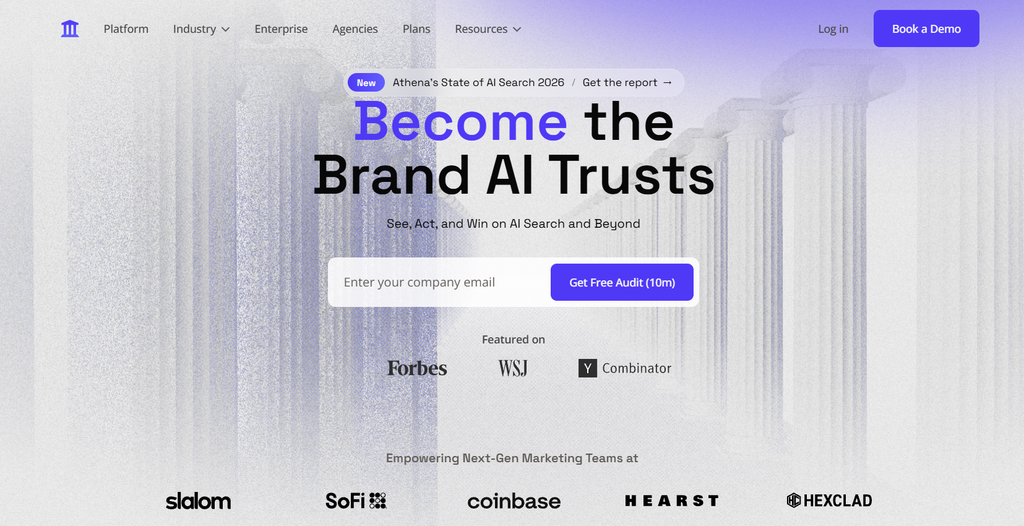
AthenaHQ provides monitoring for how brands appear across AI search and answer engines. It can help teams track brand mentions, competitors, citations, and changes in AI-generated responses over time.
This type of monitoring is useful because AI responses can change even when a company’s own website has not. Regular tracking can therefore reveal changes that traditional SEO tools may not pick up.
Key features
- AI visibility monitoring
- Brand and competitor tracking
- Citation analysis
- Prompt monitoring
- AI response tracking
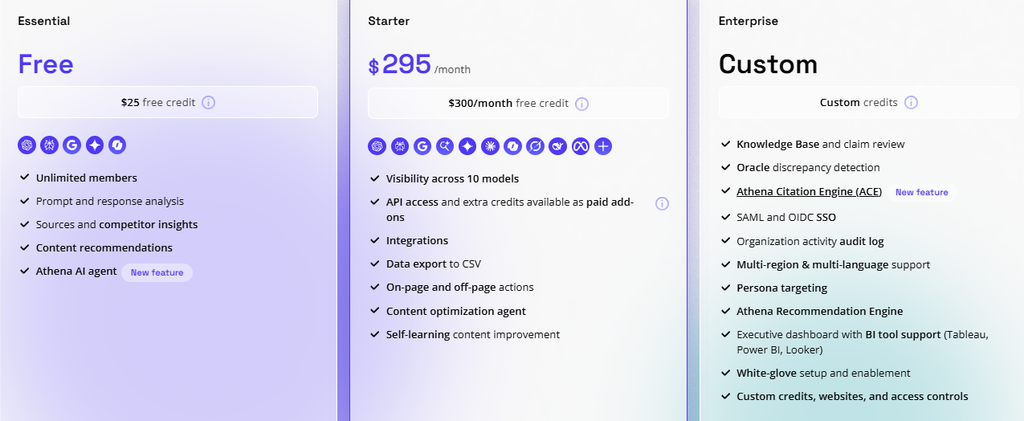
Pricing
Goodie AI
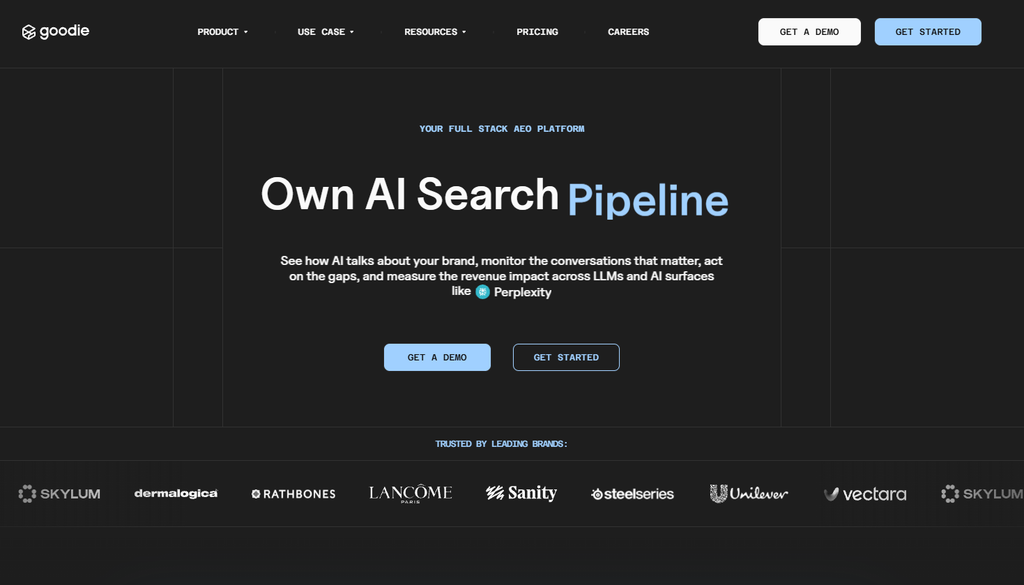
Goodie AI focuses on helping businesses understand their presence across AI platforms and identify opportunities to improve how they are represented.
Rather than looking at AI visibility as just a single number, it provides information about mentions, recommendations, and competitive positioning.
Key features
- AI visibility tracking
- Brand monitoring
- Competitor analysis
- Prompt tracking
- AI recommendation monitoring
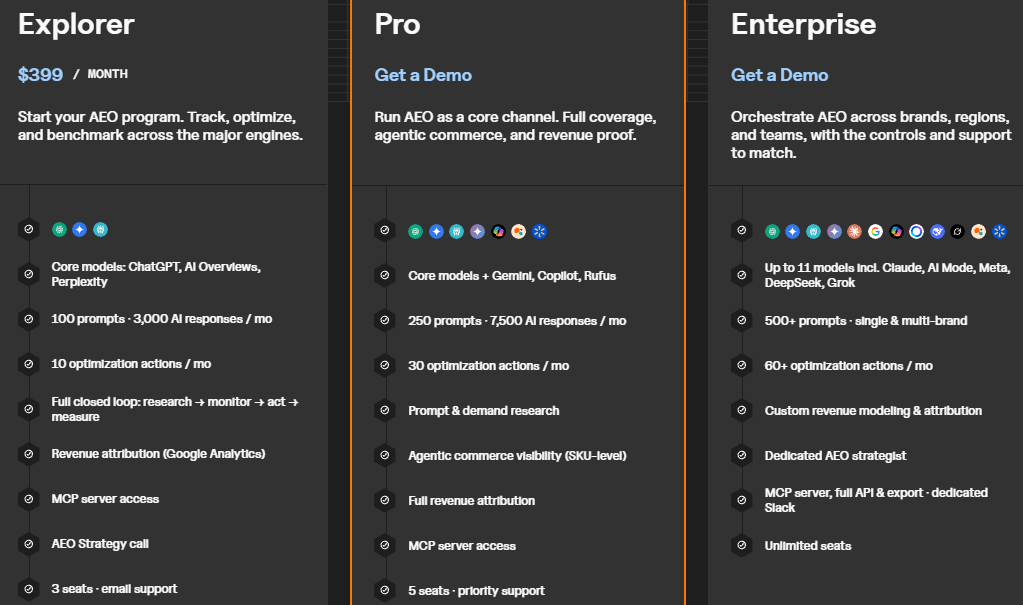
Pricing
Which AI Visibility Tool Should You Choose?
Choose Profound for enterprise-level monitoring, Peec AI for marketing teams, and Otterly.AI for a simpler starting point. Semrush and Ahrefs Brand Radar if you already use their SEO platforms. For focused AI-search tracking, consider LLMrefs, Scrunch AI, AthenaHQ, or Goodie AI.
FAQs
How to get AI visibility?
Improve your brand’s presence across trusted sources that AI engines use for information. Publish useful content, earn credible media coverage, build expert authority, maintain consistent brand information, and monitor how AI platforms describe and recommend your brand.
How to see AI visibility?
Use AI visibility or GEO monitoring tools to test your brand across relevant prompts in platforms such as ChatGPT, Perplexity, and Claude. These tools can show how often your brand appears, how it compares with competitors, how it is described, and which sources influence the responses.
What is a good AI visibility score?
There is no universal score that qualifies as “good.” AI visibility scores vary by tool and industry. By not only focusing on the number, compare your score with competitors and track whether your visibility, rankings, mentions, and sentiment improve over time.
What is the purpose of visibility?
The purpose of AI visibility is to understand whether your brand is being discovered, mentioned, and represented accurately when people use AI to research your industry. It helps businesses identify visibility gaps, monitor competitors, strengthen their reputation, and improve their chances of being included in AI-generated recommendations.

Sapna Ghodasara is the founder of Guide of AI Tool, where she writes in depth reviews of AI tools for marketers, creators and businesses. Her reviews focus on what matters before you pay for a tool: real use cases, honest pros and cons, pricing, and how well it fits into an everyday workflow.
Sapna is the cofounder of SEOMagicLab, an SEO and link building agency serving B2B SaaS, ecommerce and content brands. That mix of technical training and daily marketing work lets her judge AI tools from two angles: how well the technology actually performs and whether it delivers real value for the people using it.