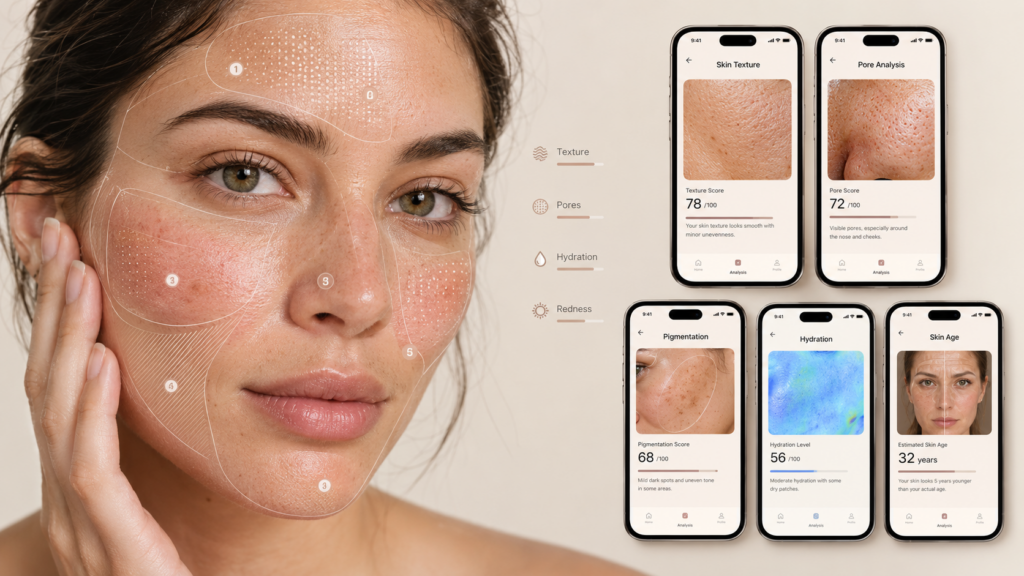
Do you want to know what skincare products you should actually be using?
This question comes to mind for almost everyone when they start their skincare journey. The problem is that there is already so much skincare information that figuring out what your skin actually needs can feel overwhelming.
Using the wrong skincare products can also irritate your skin or make existing problems worse. Of course, you can always visit a dermatologist, but for basic skincare concerns, many people first look for simpler ways to understand their skin and build a routine.
Many beauty companies and apps now use AI to analyze your skin, identify concerns, and suggest products or skincare routines. But how accurate is it, and which apps actually do a good job?
In this article, let’s try to understand all about AI skin analysis, how it works, and what the best beauty apps for it.
What is AI Skin Analysis?
AI skin analysis is a digital approach to understanding your skin, where an AI model examines a photo and highlights concerns you may want to pay attention to.
Depending on the tool, it might check for things such as acne, dark spots, redness, wrinkles, fine lines, uneven skin tone, or enlarged pores. Some tools go a step further and use the results to suggest skincare products.
How Accurate Is AI Skin Analysis?
The accuracy depends heavily on the app and AI model. However, here are some things you should be aware of
AI Can Perform Well in Controlled Tests
Recent research shows that AI dermatology systems can achieve fairly strong results under controlled conditions. A 2025 systematic review and meta-analysis looked at 18 studies involving more than 70,000 test images and found an overall AUROC of 0.88. However, the results changed depending on where and how the AI was used. The AUROC dropped to 0.81 in smartphone settings, compared with 0.90 in specialist settings.
This difference is important because a model tested in a clinic with high-quality images isn’t necessarily going to perform the same way when someone takes a selfie at home.
Consumer Apps Can Be Much Less Consistent
Real-world consumer apps show why you shouldn’t take impressive AI accuracy claims at face value.
A 2025 study tested three AI dermatology apps on 32 Indian patients and compared their results with diagnoses made by dermatologists. Aysa correctly identified the top diagnosis in 59.4% of cases, while Skinner reached 53.1% and AI Dermatologist Skin Scanner reached 46.9%. The apps also performed worse for some pigmentary and inflammatory conditions.
That’s a long way from saying that an AI skin app can reliably diagnose whatever appears on your face.
Skin Tone Can Affect the Results
Another issue is how these systems perform across different skin tones.
The 2025 meta-analysis found an AUROC of 0.89 for Fitzpatrick skin types I–III compared with 0.82 for types IV–VI. That’s a measurable gap, and the researchers linked it to differences in how well AI systems generalize across skin tones.
A separate systematic review published in June 2026 reached a similar concern. Across 15 studies, several AI systems showed reduced diagnostic performance for people with darker skin tones.
So, Can You Trust an AI Skin Score?
For everyday skincare, an AI scan can still be useful as a starting point. It may help you notice visible concerns, track changes, or narrow down which products you want to research.
The important part is knowing what the score actually means. An AI saying that your pigmentation score is high doesn’t explain what caused it. And an app identifying a possible skin condition isn’t the same as receiving a medical diagnosis.
For anything persistent, unusual, painful, rapidly changing, or potentially serious, a dermatologist is still the safer option. AI skin analysis works best as a supporting tool, not as a replacement for professional assessment.
Best Beauty Apps for AI Skin Analysis
You probably have already heard about these brands and have used at least some product from them. But you might not know that they have an AI skin analysis tool.
L’Oréal Paris Skin Genius
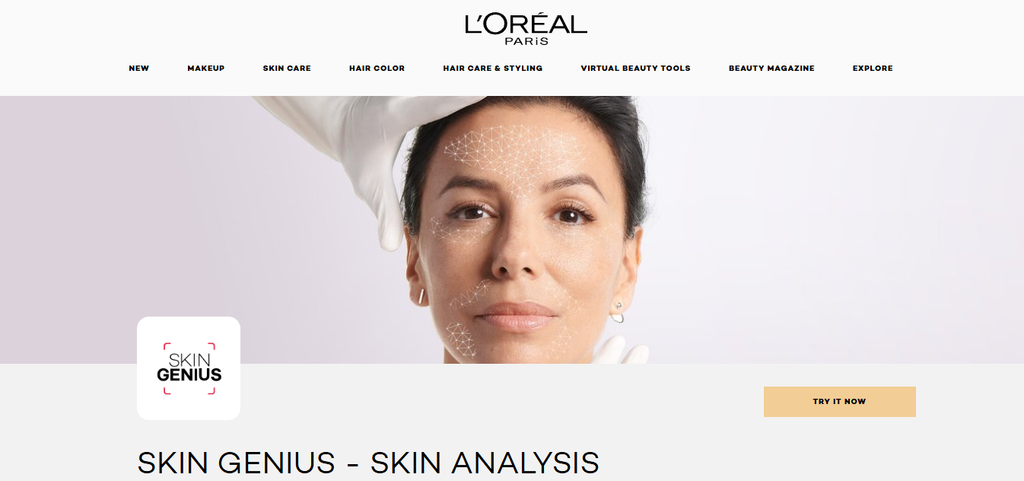
L’Oréal Paris is one of the biggest beauty brands in the world, offering products across skincare, makeup, haircare, and beauty technology. Its Skin Genius tool brings some of that technology into skincare by using a selfie to assess your skin.
It checks eight visible attributes, including wrinkles, radiance, firmness, pores, pigmentation, fine lines, and eye wrinkles. Based on the results and information about your skin, it then suggests a personalized skincare routine. L’Oréal says the technology can achieve up to 95% accuracy compared with dermatologist evaluation, although this shouldn’t be confused with medical diagnosis.
Features
- AI selfie skin analysis
- Checks 8 skin attributes
- Wrinkle and pigmentation analysis
- Personalized skincare routine
- Product recommendations
Olay Skin Advisor
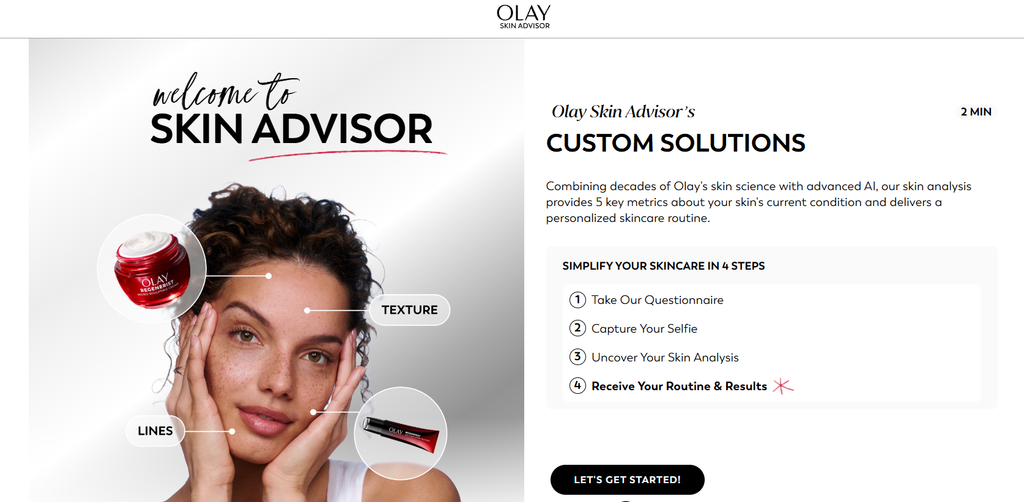
Olay, a skincare brand owned by Procter & Gamble, is known for products targeting hydration, aging, dark spots, and other common skin concerns. Its Skin Advisor tool uses AI to examine a photo of your face and assess areas such as lines, dark spots, texture, sagging, and eye lines.
It can then recommend products and ingredients based on the results. Olay says its AI was trained using more than 3 million images representing different ages, skin tones, and ethnicities, making the tool one of the more data-focused options on this list.
Features
- AI skin assessment
- Checks lines and dark spots
- Texture and sagging analysis
- Skin age estimate
- Personalized product recommendations
Neutrogena Skin360
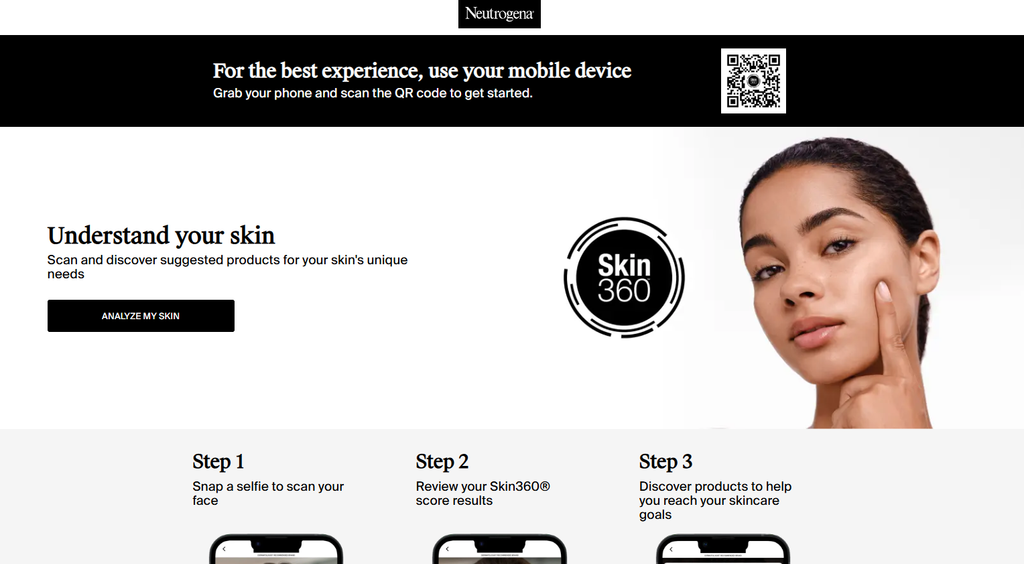
Neutrogena is a well-known skincare brand with products covering acne, hydration, sun protection, and anti-aging. Its Skin360 tool lets you use your phone’s camera for an AI-powered skin assessment. The tool evaluates different aspects of your skin and provides scores along with product and ingredient recommendations.
Neutrogena says Skin360 can examine more than 150 facial biomarkers and over 15 skin health and beauty metrics. This makes it a useful option if you want a quick skin check without going through a complicated process.
Features
- AI-powered selfie scan
- 150+ facial biomarkers
- 15+ skin health metrics
- Personalized skincare advice
- Product and ingredient recommendations
Vichy SkinConsult AI
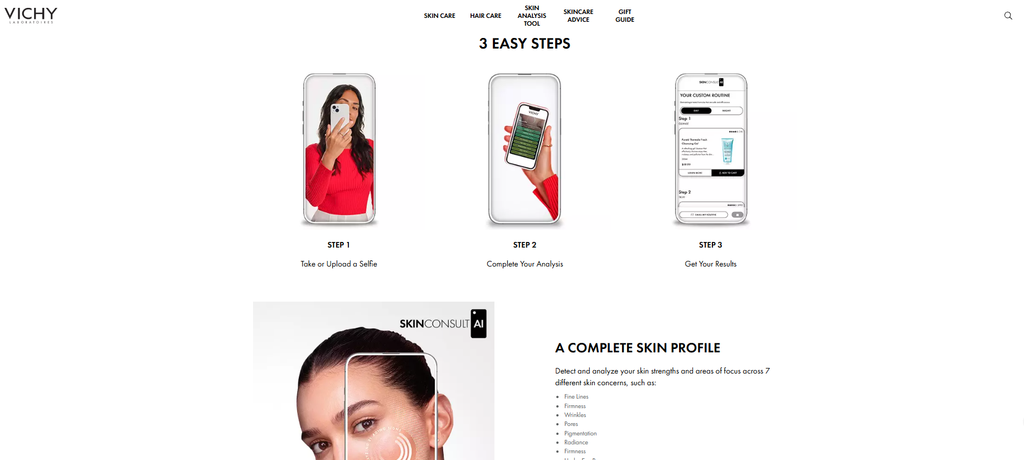
Vichy is a French skincare brand owned by L’Oréal and has a stronger dermatology-focused identity than many mainstream beauty brands. Its SkinConsult AI tool uses a facial photo to assess visible signs of skin aging and create a personalized skin profile.
The analysis focuses on concerns such as wrinkles, firmness, radiance, and other visible changes associated with aging. After the assessment, it recommends products from Vichy’s range based on your results. If you’re mainly interested in understanding visible signs of aging, this is one of the more focused tools to consider.
Features
- AI skin-aging analysis
- Facial skin mapping
- Identifies visible aging concerns
- Personalized skin profile
- Product recommendations
Cetaphil MySkin
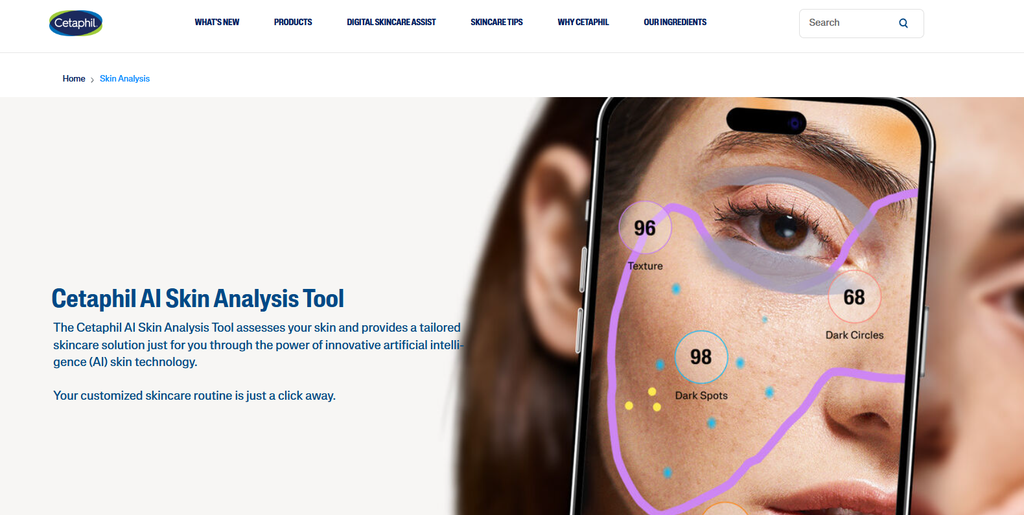
Cetaphil is a skincare brand owned by Galderma and is particularly known for products designed for sensitive and easily irritated skin. Its MySkin tool uses AI to analyze a selfie and provide a personalized skin report and skincare recommendations.
You can also answer questions about your skin if you don’t want to rely solely on a photo. The tool is useful for people who want product suggestions from a brand that puts a strong emphasis on gentle skincare and sensitive skin.
Features
- AI selfie skin analysis
- Personalized skin report
- Skin concern identification
- Skincare routine suggestions
- Cetaphil product recommendations
Uses of AI Skin Analysis
Getting a Quick Skin Check
You can use an AI scan when you simply want a general idea of what is visible on your skin. It can be easier than trying to judge everything yourself after looking in the mirror.
Keeping Track of Changes
Regular scans can give you a reference point. If you use the same tool and take your photos in similar conditions, you may be able to see whether certain concerns appear to be changing over time. This can be particularly useful when you’re trying a new skincare routine.
Finding Products to Try
Some apps connect their analysis directly to skincare recommendations. Instead of searching through hundreds of products, you may get suggestions based on the concerns identified during the scan.
The Limitations of AI Skin Analysis
AI Skin Analysis Can’t Examine Everything
A close up selfie shows only what is visible on the surface. It can’t examine your skin in person, perform a biopsy, or carry out the other checks a dermatologist may use.
Your Photo Can Affect the Result
Different lighting, camera quality, makeup, filters, shadows, and even the angle of your face can change what the AI detects. A scan taken in bright daylight may produce a different result from one taken in a dark bathroom.
Results May Vary Across Skin Tones
AI systems need diverse training data to work reliably across different people. If certain skin tones are underrepresented in the data used to develop a model, its results may be less reliable for those users.
AI Skin Analysis Shouldn’t Replace a Dermatologist
AI skin analysis is best treated as a convenient skincare tool. It can help you spot visible concerns and give you ideas for where to start.It shouldn’t be used to diagnose a medical condition or decide that you don’t need professional care.
Conclusion
AI skin analysis can make it easier to understand some of the visible things happening on your skin. A quick scan can point out concerns such as pigmentation, wrinkles, acne, or pores and, in some cases, help you find products that match those concerns.
But the results should be taken as a starting point. Different apps can give different scores, and factors such as lighting, image quality, and skin tone can affect the analysis. These tools also cannot explain the underlying cause of a skin problem or replace a proper medical examination.
FAQs
What is AI skin analysis?
AI skin analysis uses AI to examine a photo of your skin and identify visible concerns such as acne, wrinkles, pores, or pigmentation.
Is AI skin analysis accurate?
It can be useful for visible concerns, but accuracy varies between tools and conditions.
Can AI skin analysis diagnose skin problems?
No. It should not be used as a replacement for a dermatologist.
Is AI skin analysis safe?
Generally, yes, but check how the app collects and handles your facial images.
Can AI skin analysis recommend skincare products?
Yes. Many tools use the analysis to suggest products, ingredients, or skincare routines.