Lead generation is something we all have to do in some way or other. It is the main pillar of a business. If you can’t generate leads, you won’t be able to sell. Which defies the entire point of having a business. Whether a business is offline or online, it’s not easy to generate leads.
The market for lead generation is continuously growing, and more than half of marketers spend at least 50% of their marketing budget on lead generation.
Manually finding contacts and companies is next to impossible; you will never know how to find what. Lead generation tools help in doing that.
In this article, I have listed some amazing Lead generation tools that you will definitely find useful. I have also mentioned what lead generation tools are, why you should use them, and the benefits it has.
What are lead generation tools?
Lead generation tools help you find potential customers, collect contact details, and manage outreach. They can be used to build prospect lists from LinkedIn, company websites, and web forms. Your team spends less time copying data and more time speaking with qualified leads.
Types of Lead Generation Tools
Lead generation tools come in all shapes and forms, and they do not all perform the same tasks. These are types of lead generation tools:
Lead Management
Organize leads and track them through your sales pipeline.
Lead Prospecting
Find new leads and add company and contact details.
Email Outreach
Send personalized emails and automate follow-ups.
Lead Capture
Collect leads from your website with chatbots and visitor tracking.
Lead Qualification
Score and rank leads so you can focus on the best opportunities.
Reasons You Should Be Using Lead Generation Tools
If you still think Lead generation is not a necessity, then think again. It will help your business with so many things altogether.
Understand Your Customers
Knowing what your customers want and don’t want is a core part of running a business. Lead generation tools show more than names and email addresses. They track how prospects interact with your website, emails, and content.
Focus on Better Leads
Sales teams spend too much time on contacts that never reply. Lead generation software helps you spot stronger prospects by using data like buying intent, engagement, and company details.
Save Time with Automation
Manual tasks add up quickly. Sending follow-up emails, updating your CRM, and assigning leads can take hours every week. Most lead generation tools automate these jobs. Your team spends less time on routine work and more time speaking with potential customers.
Increase Conversions
Quick follow-ups make a difference. Leads are more likely to respond when they receive timely and relevant messages. Lead generation tools help you send the right email, start a chat, or schedule a follow-up based on a prospect’s actions.
Lead Generation Tools Quick Comparison Table
| Tool | Best For | Key Feature | Free Plan |
| Cognism | B2B sales teams | Verified B2B contact database | No |
| Chatling AI | Website support and lead capture | AI chatbot for websites | Yes |
| Sameday AI | Sales automation | AI lead qualification and scheduling | No |
| Clay | Lead enrichment | Data enrichment from multiple sources | No |
| Snov | Email outreach | Email finder and automation | Yes |
| LeadIQ | Sales prospecting | LinkedIn lead capture | Yes |
| Warmly | Website visitor tracking | Visitor identification and intent data | No |
| Kaspr | LinkedIn prospecting | Contact and phone number finder | Yes |
| Hunter | Email prospecting | Email finder and verifier | Yes |
Lead Generation Tools for Every Business
I have listed the best and most popular lead generation tools here.
Cognism
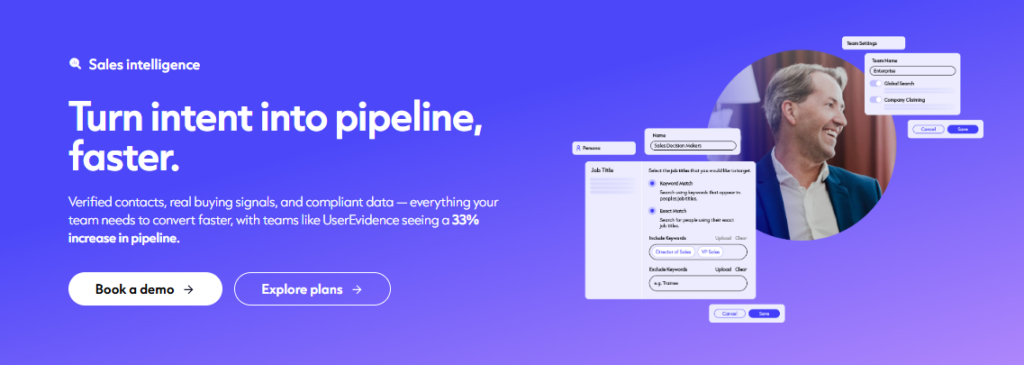
Cognism is a tool that finds verified contacts and buyer insights. It is best known for its strong European contact database, GDPR-compliant data, and CRM integrations that support prospecting and lead generation.
Features
- B2B contact database
- Verified emails and phone numbers
- Buyer intent data
- CRM Data Enrichment
- LinkedIn Chrome Extension
- Diamond Data Verification
Strengths
- High-quality contact data
- Strong compliance features
- Easy CRM syncing
Weaknesses
- Expensive for small teams
- Limited free access
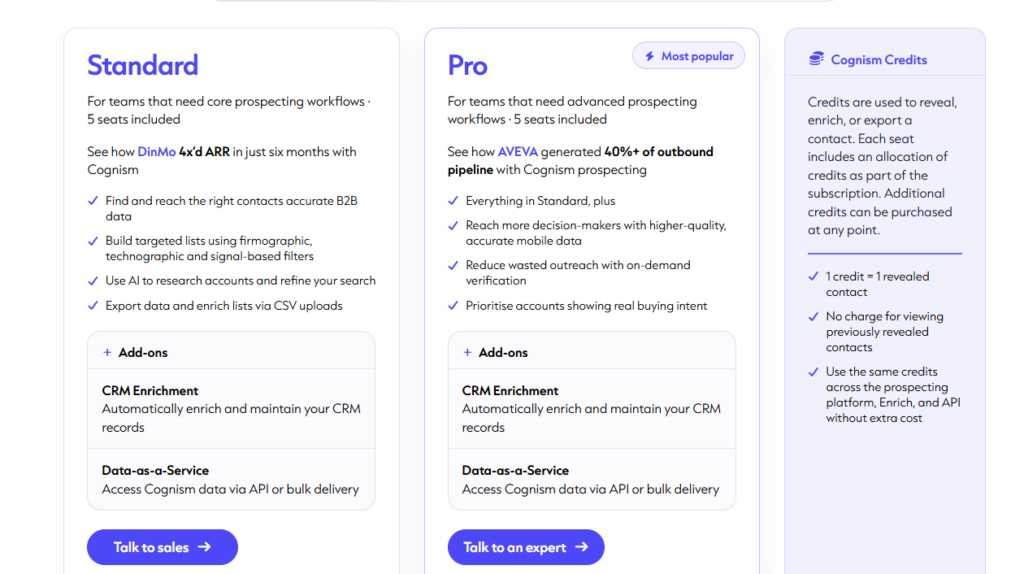
Pricing
Chatling AI
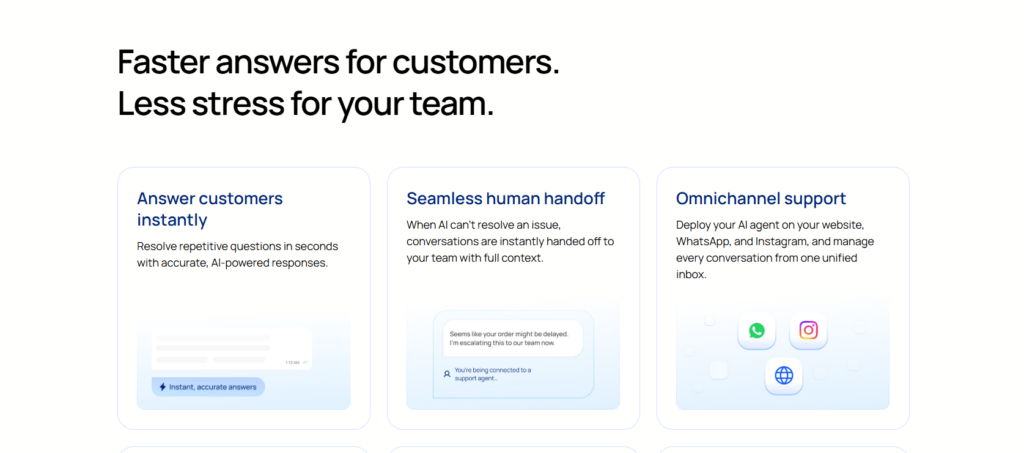
Chatling AI is a lead generation tool that deploys AI agents on your website. It answers questions that help your company capture more leads and enables businesses to handle conversations.
Features
- AI chatbot builder
- Website knowledge base
- Live chat handoff
- Analytics dashboard
- Unified Inbox
- Multilingual Capabilities
- Conversation Summaries
- Scalable Performance
Strengths
- Easy to set up
- No coding required
- Fast chatbot training
- Works well for global audiences
Weaknesses
- Limited advanced customization
- Premium features require paid plans
Pricing
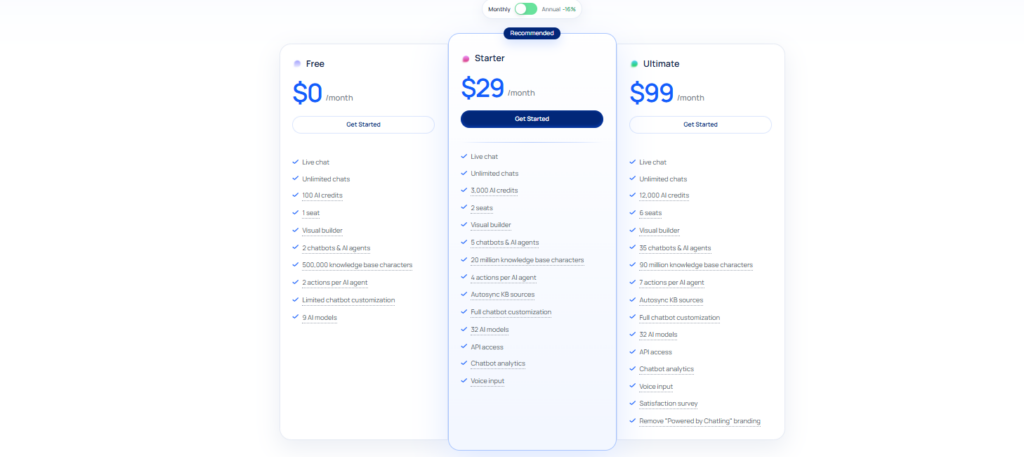
Paid plans start around $29/month
Sameday AI
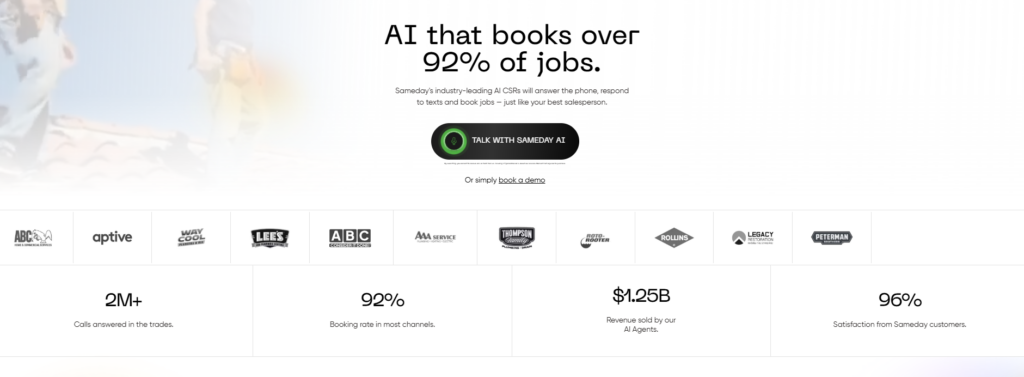
Sameday AI is a lead generation tool built for service-based businesses. It helps capture leads and book jobs automatically. Every incoming call is answered instantly, even after business hours. This ensures potential customers never reach voicemail.
Features
- AI sales assistant
- Lead qualification
- Meeting scheduling
- CRM integration
- Customizable AI Responses
- Call Minutes Included
- Unlimited Users
Strengths
- Saves sales time
- Automates lead follow-up
- Easy workflow integration
Weaknesses
- Enterprise pricing isn’t upfront.
- Initial setup takes time.
Pricing
Pricing starts at $449/month.
Clay
Clay is a lead generation tool that finds data such as company info, job profiles, and social media profiles of people. Clay can be used by teams on the same database.
Features
- Lead enrichment
- AI prospect research
- Data automation
- CRM integrations
- Contact Management
- Smart Search and Filters
Strengths
- Powerful automation
- Large data source network
- Highly customizable
Weaknesses
- Learning curve for beginners
- Credit-based usage
Pricing
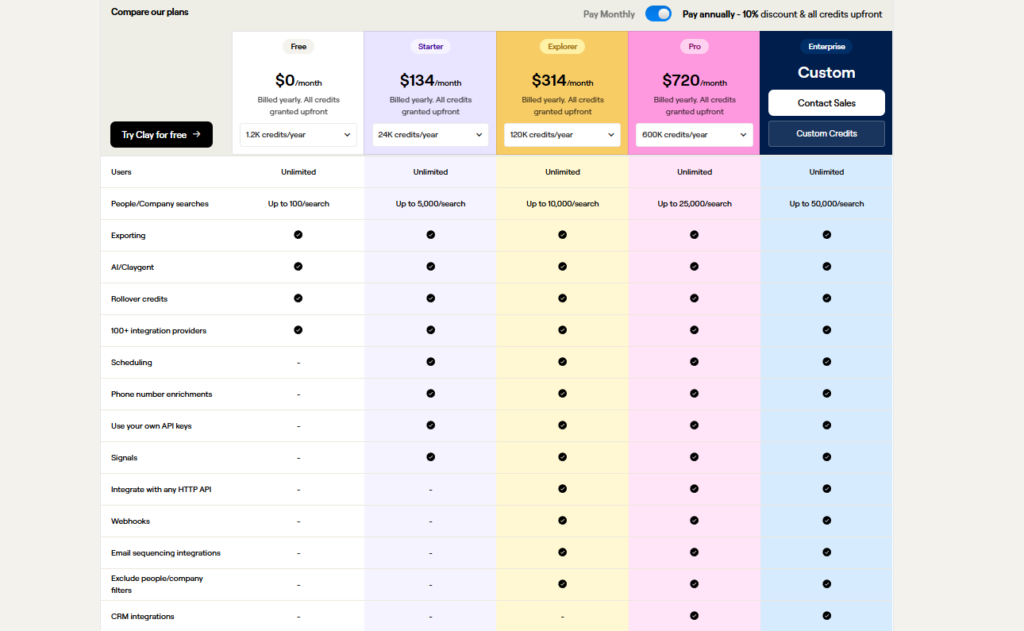
Paid plans start around $134/month
Snov
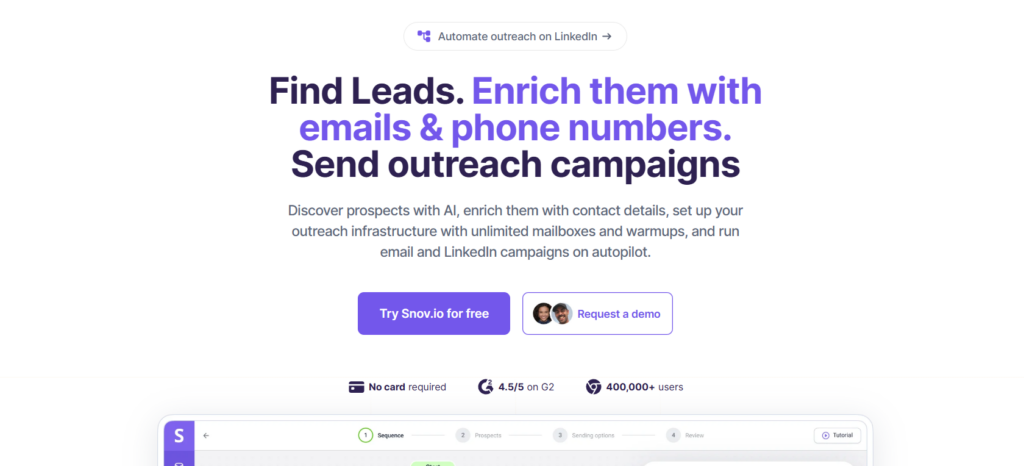
Snov is a lead generation tool that finds B2B leads, can verify email addresses, and contacts prospects through email and other channels. You can even generate cold emails with the AI email writer feature.
Features
- Email finder
- Email verifier
- Drip campaigns
- CRM integration
- Multichannel Outreach
- AI Email Writer
Strengths
- All-in-one outreach platform
- Affordable pricing
- Easy to use
Weaknesses
- Limited credits on lower plans
- Advanced automation costs more
Pricing
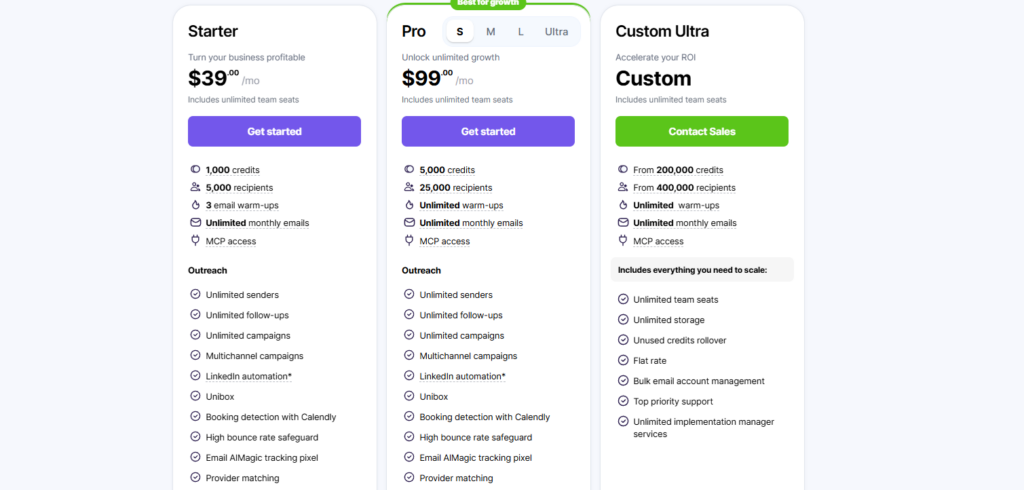
Paid plans start around $39/mont.h
LeadIQ
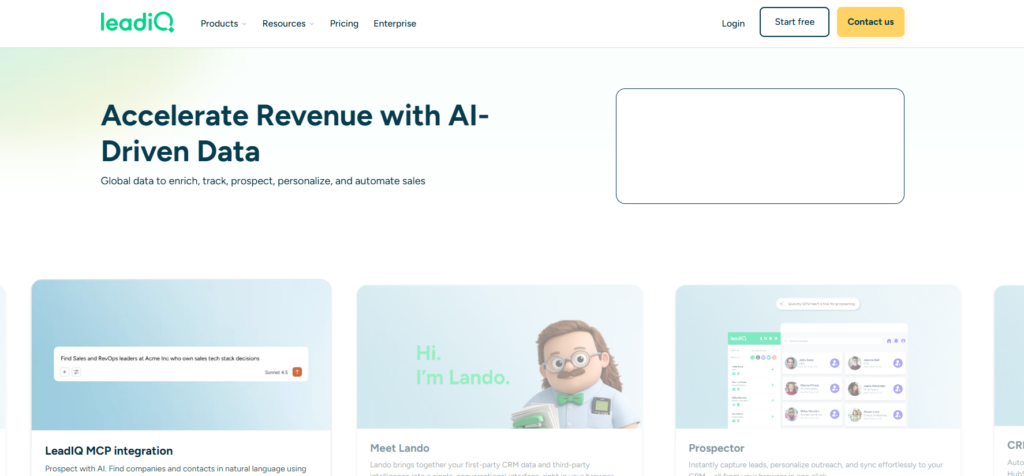
LeadIQ is a lead generation tool. Sales teams can use it to find business contacts and move them into a CRM without copying information by hand. The Chrome extension can easily find names, email addresses, phone numbers, and company details.
Features
- Lead capture
- Contact enrichment
- Email tracking
- CRM sync
Strengths
- Fast prospecting
- Chrome extension
- Good CRM integrations
Weaknesses
- Credit limits
- Some data gaps
Pricing
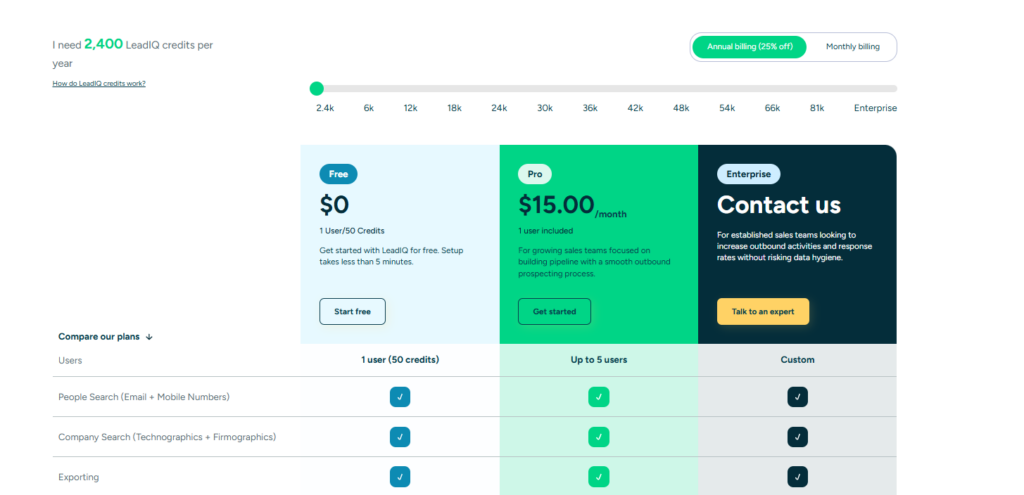
Paid plans start around $15.00/month.
Warmly
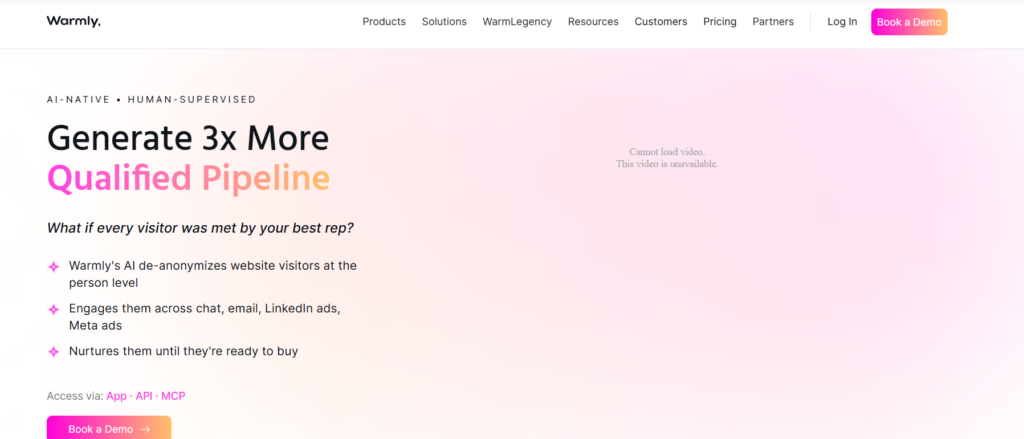
Warmly is a lead generation tool that has its focus mainly on website visitor identification and sales engagement. It matches anonymous visitors with company information, then surfaces accounts worth following up with. It also tracks buying signals and suggests outreach based on visitor activity.
Features
- Website visitor identification
- Buyer intent signals
- Lead routing
- CRM integrations
Strengths
- Real-time visitor insights
- Helps identify warm leads
- Easy integration
Weaknesses
- Better suited for B2B
- Premium features are expensive
Pricing
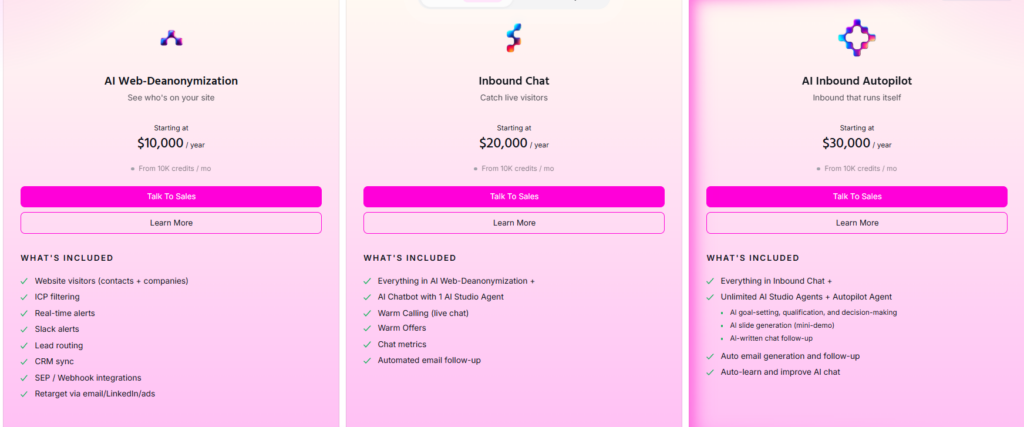
Starts at $10,000/year.
Kaspr
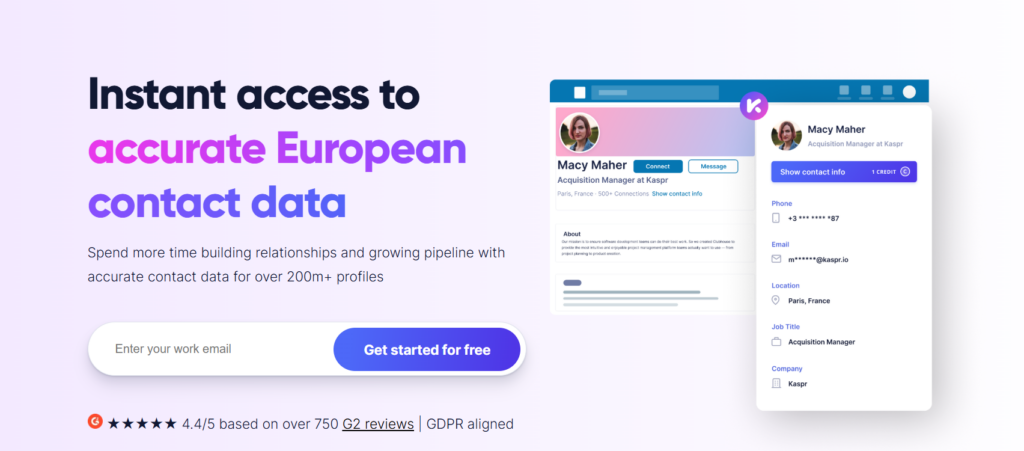
Kaspr is a lead generation tool that can be your go to AI tool for lead generation if your goal is to mainly target European contact data. After finding contact details from LinkedIn, they are placed into your workflow.
Features
- LinkedIn contact finder
- Email lookup
- Phone number finder
- CRM integrations
Strengths
- Great for LinkedIn prospecting
- Simple interface
- Accurate contact details
Weaknesses
- Limited free credits
- Mainly focused on Europe
Pricing
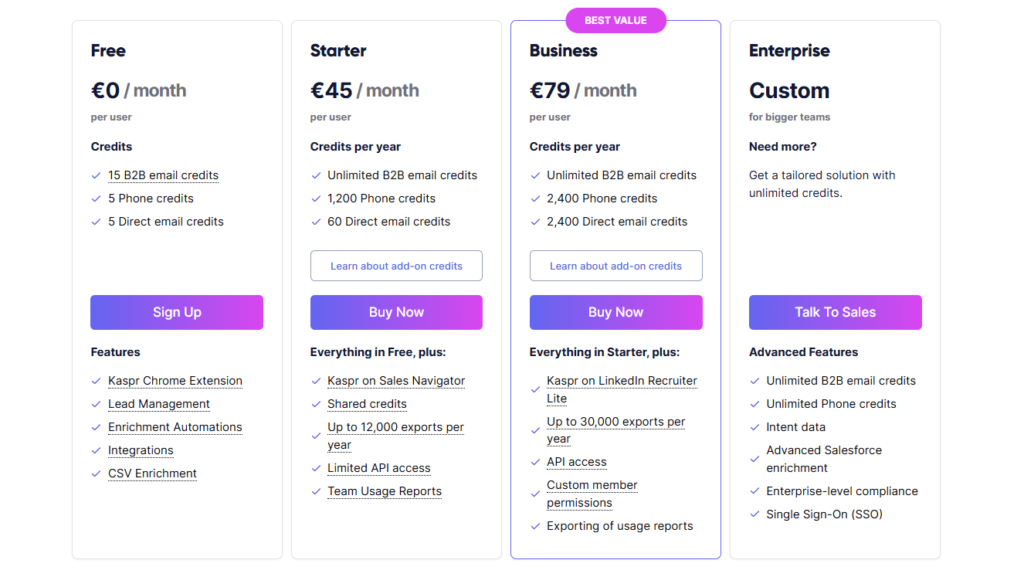
Free plan is available. Paid plans start around $49/month
Hunter
Hunter is a lead generation tool that mainly finds email addresses and verifies if an email address is correct. It is considered very reliable for email verification, which means it finds the correct data almost all the time.
Features
- Email finder
- Email verifier
- Domain search
- Campaign management
Strengths
- Reliable email verification
- Easy to use
- Strong domain search
Weaknesses
- Limited beyond email prospecting
- Credit-based plans
Pricing
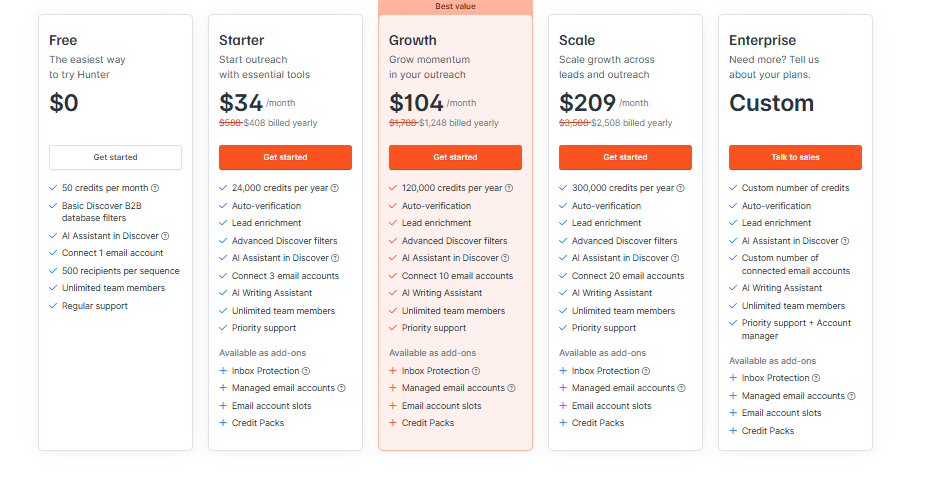
Paid plans start around $34/month
Conclusion
Lead generation tools enable businesses to source leads and identify opportunities to convert prospects into customers. By automating lead gathering, managing contacts, and optimizing contact campaigns with minimal human intervention, these tools benefit from lead capture, organized prospective customers, and a manageable outreach process.
Tools are geared towards sourcing new, qualifying customers or automating responses, and tracking interactions between customers and your team.
FAQs
Can ChatGPT do lead generation?
ChatGPT helps with some parts of lead generation. It can be used to write outreach emails, create follow up messages, and qualify prospects from existing data. It does not collect verified contact information on its own. You still need a lead database or prospecting tool for contact data.
Which CRM is best for lead generation?
LeadIQ gives the smoothest experience for lead generation because it captures prospects and syncs them with a CRM. Cognism fits larger B2B sales teams. Clay enriches lead data. Snov focuses on email outreach. Kaspr works well for LinkedIn prospecting.
Hunter verifies business emails. Warmly tracks website visitors. Chatling AI captures leads through website chats. Sameday AI helps automate sales follow ups.
What is the fastest way to generate leads?
By combining LinkedIn prospecting, email outreach, and website lead forms. Paid search campaigns also bring leads quickly when targeting looked accurate. Your response time matters because quick replies often lead to more conversations.
What are the five marketing tools?
Many businesses rely on a CRM, an email marketing platform, a social media scheduling tool, an analytics platform, and a lead generation tool.
What are the types of lead generation?
In general, lead generation falls under either inbound and outbound. Content marketing, website forms, search engine optimization, and social media are inbound lead generation practices. Cold emailing, LinkedIn prospecting, paying for lead data, and cold calling are outbound practices.